Walk into any supplement aisle or scroll through an online store and you will see Akkermansia muciniphila products advertising anywhere from 100 million to 100 billion CFU per serving. Colony-forming units sound precise and scientific, but for a bacterium as novel to the supplement market as Akkermansia, those numbers raise more questions than they answer. Understanding what a CFU actually measures, how it is counted, and why it may not translate directly into gut benefit helps you read a label with realistic expectations.
Akkermansia muciniphila is a mucus-layer bacterium that makes up more than 1 percent of a healthy adult gut microbiome[1]. Researchers have proposed it supports intestinal barrier integrity and may influence metabolic markers, but the supplement category is still young and regulatory standards for labeling CFU are not uniform across the industry. This guide explains the terminology, the math, and the honest limits of what a dose number can promise.
Key Takeaways
- CFU measures living, culturable bacteria at the time of testing, not necessarily what survives to reach your colon.
- Always check whether the CFU guarantee applies at manufacture or at expiry; the difference can be tenfold.
- Pasteurized Akkermansia products contain no living cells, so CFU is an inappropriate metric for them; look for biomass or cell-equivalent reporting instead.
- Higher CFU numbers have not been proven to produce greater effects in humans; dose-response data for Akkermansia supplements is limited.
- Strain identity, oxygen-protective packaging, and third-party stability testing are more informative quality signals than the CFU headline number alone.
What CFU Actually Measures
CFU stands for colony-forming unit. In microbiology it represents a single viable cell, or a tightly bound cluster of cells, capable of dividing and forming a visible colony when plated on growth medium. Manufacturers count CFU by diluting a sample, spreading it on agar plates, incubating them, and counting the colonies that grow. The result is reported per gram, per capsule, or per serving.
A critical nuance is that CFU counts only living, culturable bacteria. Dead cells, damaged membranes, and spores that will not germinate under lab conditions are invisible to a standard plate count. This matters for Akkermansia because it is an obligate anaerobe, meaning it dies on contact with oxygen[2], and keeping it alive through manufacturing, packaging, shipping, and shelf storage is a genuine technical challenge. A label showing 10 billion CFU reflects the count at manufacture or at a tested time point, not necessarily what survives to reach your gut.
At Manufacture Versus At Expiry: The Overage Problem
Responsible manufacturers add what the industry calls overage, extra bacteria beyond the label claim, to compensate for die-off during the product’s shelf life. A capsule labeled 5 billion CFU might contain 15 or 20 billion CFU on the day it is bottled so that it still delivers 5 billion at the best-by date. Products that do not disclose whether the CFU count is guaranteed at manufacture or at expiry may be misleading even when the number looks large.
When comparing two Akkermansia products, look for the phrase ‘at time of expiry’ or ‘at end of shelf life’ on the label. If you see only ‘at time of manufacture,’ the actual dose you swallow could be a fraction of what is printed. Some manufacturers publish third-party stability testing certificates that show viability curves over time; this data is far more informative than a single CFU headline number.

Pasteurized Versus Live Formulations: A Different Kind of Dose
One of the most important distinctions on an Akkermansia label is whether the product contains live bacteria or pasteurized bacteria. Pasteurization kills the cells intentionally. That might sound counterproductive, but research interest in pasteurized Akkermansia grew after scientists identified that an outer-membrane protein called Amuc_1100 appears to retain biological activity even after the cell is heat-killed, potentially interacting with intestinal receptors without requiring a living organism[3].
Because pasteurized products contain no living cells, applying a CFU count to them is technically inaccurate. Some pasteurized Akkermansia products instead report dose in milligrams of bacterial biomass or as a cell-equivalent count. If you see a pasteurized product using CFU language, treat the number with skepticism and look for the manufacturer’s explanation of how dose is defined. For live products, standard CFU counting applies, but the anaerobic fragility of Akkermansia means the measurement method, atmosphere during plating, and storage conditions all affect reliability.
Neither formulation type has been approved by the FDA to treat or prevent any disease. The clinical evidence comparing pasteurized to live Akkermansia supplements in humans remains limited, and head-to-head dose-response data in healthy adults is not yet available in the published literature.
How Industry Dose Ranges Were Arrived At
Early human intervention studies exploring Akkermansia supplementation typically used doses in the range of 10 billion CFU per day[4], largely because that range was feasible to manufacture and deliver in a single capsule while still providing a meaningful inoculum relative to the bacteria’s natural abundance. Some pilot studies used lower doses around 1 billion CFU to test tolerability.
These numbers were not derived from rigorous dose-finding trials with clear minimum-effective-dose data. They reflect practical manufacturing constraints and the doses researchers could confidently produce and stabilize. Commercial products now span a wide range, with some marketing 50 billion or 100 billion CFU per serving. There is no published human evidence demonstrating that higher CFU counts in these ranges produce proportionally greater benefits, and the assumption that more is better has not been validated for Akkermansia in the way it might be approached for a pharmaceutical drug.
What CFU Cannot Tell You
A CFU count does not tell you how many bacteria survive gastric acid and bile salts to reach the colon alive. Akkermansia naturally resides deep in the mucus layer of the large intestine[2], and an orally swallowed capsule must survive a pH as low as 1.5 in the stomach, exposure to bile in the small intestine, and transit time before any cells arrive at their target niche. Enteric coating, delayed-release capsules, and microencapsulation technologies all attempt to improve delivery, but survival rates through simulated digestion vary widely across product formats and are not standardized on labels.

CFU also does not tell you whether the bacteria will successfully colonize your existing microbiome environment, how long any effect persists after you stop taking the supplement, or whether your baseline Akkermansia abundance affects the outcome. Your gut’s microbial community, diet, antibiotic history, and host immune tone all interact with any introduced microorganism in ways a single dose number cannot capture.
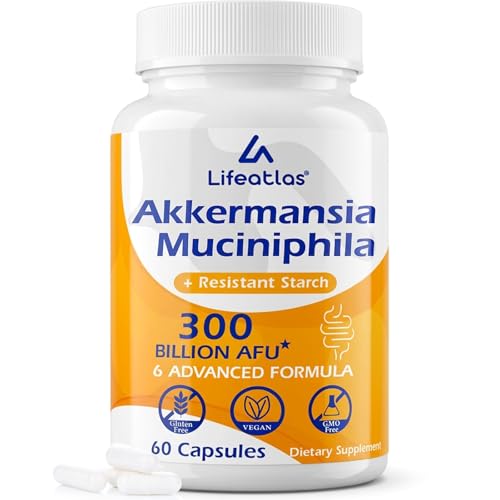
Finally, CFU says nothing about strain identity. Akkermansia muciniphila exists as multiple strains with potentially different functional characteristics. The strain designation, if present, should appear on the label alongside the CFU count. Products that list only the species name without a strain identifier give you less information than those that name the specific strain and ideally reference the clinical work done with that particular strain.
Reading a Label Critically: A Practical Checklist
When evaluating an Akkermansia supplement label, work through these questions before relying on the CFU headline. First, is the product live or pasteurized, and does the dose metric match that format? Second, is the CFU count guaranteed at manufacture or at expiry? Third, does the label name a specific strain? Fourth, does the packaging protect against oxygen exposure, typically through nitrogen-flushed blister packs, amber glass, or foil-sealed capsule strips? Fifth, has the manufacturer published third-party testing results for potency and species identity?
Labels that answer all five questions transparently are giving you more useful information than a product that simply prints a large CFU number on the front. A 5 billion CFU product with rigorous stability data and named strain may deliver more reliable biology than a 50 billion CFU product with no stability guarantee and no strain identification. Price is not a reliable proxy for quality in this still-nascent category.
🛒 Where to Buy Akkermansia muciniphila
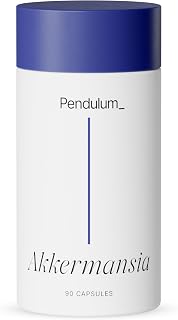
- Pendulum AkkermansiaLab-tested / studied
delayed-release capsules, 100M AFU — The only patented live A. muciniphila strain (WB-STR-0001); single-strain with chicory inulin, third-party tested. - Codeage Akkermansia Muciniphila
capsules, 100M AFU, 90 ct — Lower-cost Akkermansia plus chicory inulin synbiotic; 3-month supply, gluten-free. - Double Wood Akkermansia Probiotic + Postbiotic
capsules, per label — Budget Akkermansia option marketed around GLP-1 and postbiotic support.
As an Amazon Associate we earn from qualifying purchases. Akkermansia is a live, oxygen-sensitive strain — choose a delayed-release, third-party-tested product with a stated live AFU count.
A Note on the Evidence
The human clinical evidence for Akkermansia muciniphila supplementation remains early and limited in scale; most findings come from small pilot trials and animal models, and long-term safety and efficacy data in diverse populations are not yet established. Individuals who are immunocompromised, on immunosuppressive therapy, pregnant, breastfeeding, or managing active inflammatory bowel disease should consult a physician before using live probiotic formulations. This article is informational only and does not constitute medical advice.
Frequently Asked Questions
Is a higher CFU count always better for Akkermansia supplements?
Not based on current evidence. Human studies to date used doses roughly in the 10 billion CFU range, and no published dose-response trial has established that 50 billion or 100 billion CFU produces proportionally greater benefits. Marketing language equating higher CFU with greater potency goes beyond what the science supports at this time.


What does 'at time of manufacture' versus 'at time of expiry' mean on a label?
A CFU count at time of manufacture reflects viability the day the product was bottled. Because bacteria die off during storage, a product guaranteed only at manufacture may contain far fewer viable cells by the time you take it. A CFU count guaranteed at expiry means the manufacturer has added overage and confirmed through stability testing that the label dose survives to the best-by date.
Can a pasteurized Akkermansia product have a CFU count?
Technically no, because CFU requires the ability to form colonies, which dead cells cannot do. Some pasteurized products use CFU-like language loosely to describe the cell count at the time of pasteurization. This can be misleading. Pasteurized Akkermansia dose is more appropriately expressed in milligrams of bacterial biomass or as a heat-killed cell-equivalent number, and the label should clearly state the product is pasteurized.
Why does Akkermansia packaging matter for CFU integrity?
Akkermansia muciniphila is an obligate anaerobe that dies quickly on exposure to oxygen. Standard HDPE capsule bottles allow oxygen permeation over time, accelerating die-off. Nitrogen-flushed blister packs, foil-sealed strips, and sealed amber glass with desiccant significantly slow viability loss. A high CFU count in an unprotected bottle may degrade faster than a lower CFU count in oxygen-barrier packaging.
What is a strain, and why does it matter on an Akkermansia label?
A strain is a genetically distinct subgroup within the species Akkermansia muciniphila. Different strains may differ in their production of functional proteins, their tolerance to manufacturing processes, and their behavior in human gut environments. Clinical studies are conducted on specific strains; a product using a different strain cannot automatically inherit those study findings. Labels that name the strain and link it to published research give you more confidence that the product reflects actual studied biology.
Who should be cautious about taking live Akkermansia supplements?
Individuals who are immunocompromised, undergoing immunosuppressive therapy, living with active inflammatory bowel disease, or who are pregnant or breastfeeding should consult a qualified healthcare provider before using any live probiotic, including live Akkermansia formulations. Live bacteria can pose rare but real risks in people with compromised immune defenses. Akkermansia supplements are not FDA-approved to treat or prevent any disease.
References
- Derrien M et al. The Mucin degrader Akkermansia muciniphila is an abundant resident of the human intestinal tract. Applied and environmental microbiology (2008). PMID 18083887
- Derrien M et al. Akkermansia muciniphila gen. nov., sp. nov., a human intestinal mucin-degrading bacterium. International journal of systematic and evolutionary microbiology (2004). PMID 15388697
- Plovier H et al. A purified membrane protein from Akkermansia muciniphila or the pasteurized bacterium improves metabolism in obese and diabetic mice. Nature medicine (2017). PMID 27892954
- Depommier C et al. Supplementation with Akkermansia muciniphila in overweight and obese human volunteers: a proof-of-concept exploratory study. Nature medicine (2019). PMID 31263284
These statements have not been evaluated by the Food and Drug Administration. This information is not intended to diagnose, treat, cure, or prevent any disease. Content is for informational purposes only and is not medical advice; consult a qualified healthcare provider before starting any supplement. As an Amazon Associate we earn from qualifying purchases.