If you have been researching Akkermansia muciniphila supplements, you have probably noticed that product labels vary wildly — some list doses in CFU (colony-forming units), others in milligrams of pasteurized cells, and a few simply state a proprietary blend with no clear number at all. This inconsistency is not random. It reflects a genuine complexity in how this bacterium is researched and formulated, and understanding it is essential before you decide how much to take or whether to take it at all.
This article walks through the dosing framework human researchers have used, explains why the word ‘CFU’ can be misleading for Akkermansia products specifically, and is honest about where the evidence currently sits — which, for this organism, is still early and limited. Nothing here constitutes medical advice, and Akkermansia supplements are not approved by the FDA to treat, cure, or prevent any disease.
Key Takeaways
- Most human Akkermansia research uses pasteurized preparations, not live bacteria — so ‘CFU’ does not always apply and doses are often expressed as cell equivalents rather than colony-forming units.
- Investigational doses in human trials have generally ranged from roughly 10^9 to 10^10 organisms (or equivalents) per day, taken once daily, but no definitive effective dose has been established.
- Live and pasteurized preparations work through different proposed mechanisms (colonization vs. Amuc_1100 protein signaling), and may not be interchangeable at equivalent numerical doses.
- Individual factors — baseline Akkermansia abundance, diet, recent antibiotic use — likely influence how any given dose performs, but human data on these interactions is limited.
- The evidence base remains early-stage; supplements are not FDA-approved to treat any condition, and anyone with immune compromise, IBD, or who takes immunosuppressive drugs should consult a physician before use.
Why CFU Is a Complicated Metric for Akkermansia
CFU stands for colony-forming units — a standard measure of live, viable bacteria capable of multiplying. For organisms like Lactobacillus or Bifidobacterium, CFU is a straightforward quality marker: higher CFU generally means more live cells delivered to the gut. Akkermansia muciniphila complicates this picture because a large portion of the human research, and many commercial formulations, deliberately uses pasteurized (heat-treated) rather than live bacteria.
The reason pasteurization is preferred in many research protocols is practical and scientific. Akkermansia is an obligate anaerobe — it cannot survive exposure to oxygen at room temperature — which makes maintaining live cultures in capsule form technically difficult. More importantly, researchers have proposed that key bioactive components of Akkermansia, particularly a surface outer-membrane protein called Amuc_1100, remain functional after heat treatment and may be responsible for a meaningful share of the organism’s effects on tight-junction proteins and gut barrier signaling. When a supplement uses pasteurized Akkermansia, there are no live cells to count as CFU. Doses are instead expressed as cell equivalents, dry weight, or total organism count — none of which maps directly onto CFU.
This matters for consumers because comparing a ’10 billion CFU live Akkermansia’ product with a ‘150 mg pasteurized Akkermansia’ product requires understanding that these are fundamentally different preparations with different stability profiles, different manufacturing requirements, and potentially different biological activity — not simply different quantities of the same thing.
Dosing Ranges Observed in Human Research
Human trials of Akkermansia muciniphila are relatively few in number and small in scale. The clinical research that does exist has clustered around a particular dose range rather than testing a wide spectrum. For pasteurized preparations, the doses used in investigational settings have generally fallen in the range of approximately 10^9 to 10^10 organisms per day — that is, roughly one billion to ten billion cell equivalents taken once daily, typically with or before a meal. For live preparations, when they have been tested, equivalent numerical ranges have been used, though as noted above, survival through the upper GI tract to the colon is a relevant open question for live anaerobes.
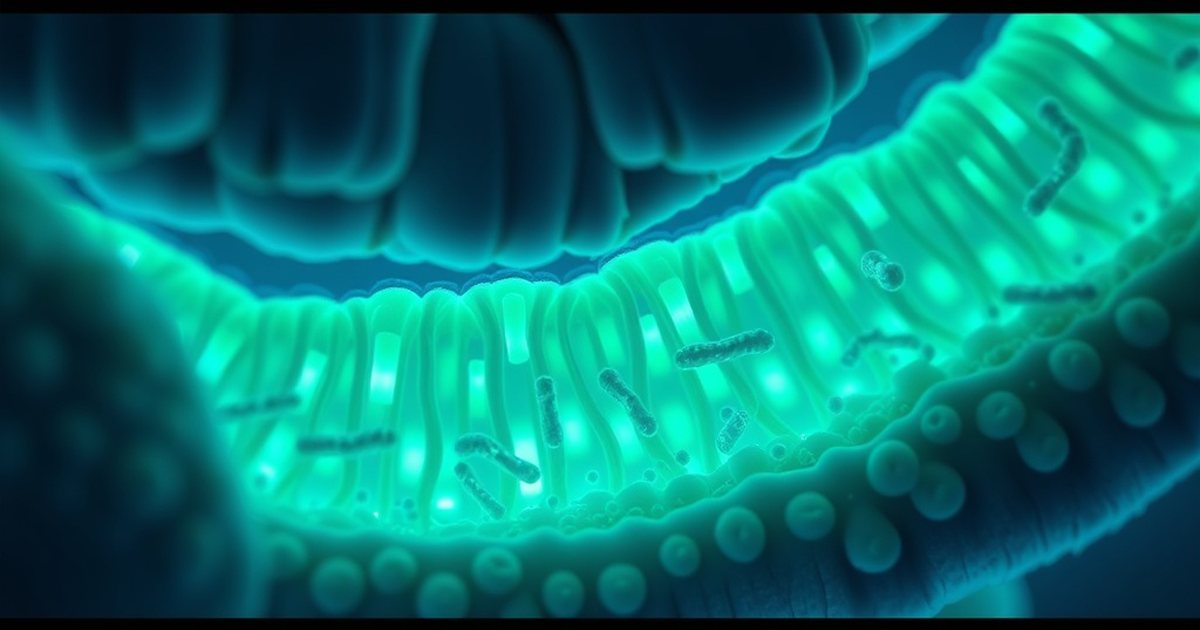
It is worth being direct here: the number of published, placebo-controlled human trials is small, and most have enrolled subjects with overweight or metabolic dysfunction rather than healthy populations. Outcomes studied have included fasting insulin, fasting glucose, plasma triglycerides, markers of gut permeability, and body composition. Results have been promising in some trials and modest or neutral in others. The overall dataset is not large enough to establish a definitive effective dose, and no dose-response curve — showing that higher doses produce proportionally greater benefit — has been firmly established in humans.
Live vs. Pasteurized: Does Preparation Affect the Dose You Need?
This is an open question. The proposed mechanism for pasteurized Akkermansia centers on Amuc_1100, which binds TLR2 receptors in the gut lining and is proposed to stimulate GLP-1 secretion, support tight-junction assembly, and modulate immune tone at the mucosal surface. Because this protein survives pasteurization, the hypothesis is that pasteurized cells may deliver comparable or even superior effects to live cells for gut-barrier and metabolic endpoints — without the survival and oxygen-exposure challenges that live preparations face.
Live Akkermansia, on the other hand, colonizes the mucus layer and actively degrades mucin glycoproteins, which stimulates the host to renew mucin production and maintain mucus thickness. This colonization dynamic does not happen with pasteurized cells. Whether ongoing colonization matters for the outcome you care about — gut barrier, metabolic markers, immune modulation — is not fully settled. The practical implication for dosing is that live and pasteurized preparations may require different quantities to achieve the same downstream effect, and that effect may differ depending on the endpoint. Researchers are still working this out.
The broader field of probiotic research is grappling with similar preparation-and-dose questions. A 2025 review on probiotic use in cancer immunotherapy noted that leveraging microbiome-immune interactions requires careful consideration of which organisms, in what form, and at what dose produce clinically meaningful effects [1]. That principle applies equally to Akkermansia research outside oncology contexts: dose, preparation, and individual microbiome baseline are all likely to matter.
What Commercial Supplements Typically Offer
Consumer-facing Akkermansia supplements vary considerably. Pasteurized products commonly list doses of 100–200 mg of dried cell mass, which manufacturers often translate into an equivalent organism count (frequently stated as ‘equivalent to 10^10 cells’). A small number of companies have developed encapsulation technology that claims to protect live Akkermansia through gastric acid, and these products typically list doses in CFU ranging from 10^9 to 5 × 10^10 per serving.
Neither dosage tier has been independently validated in large human trials as a consumer supplement, distinct from the research preparations used in controlled clinical settings. The translation from a research-grade, refrigerated, clinically monitored intervention to an over-the-counter capsule sitting on a shelf involves manufacturing assumptions that are not always transparent to buyers. Third-party testing for CFU viability at time of expiration — not just at manufacture — is one quality marker worth looking for if you are evaluating live preparations.
Frequency of dosing has generally been once daily in the research literature. There is no published human data supporting the idea that splitting a dose into two or three daily servings improves outcomes, though this has not been rigorously tested.
Factors That May Influence How Akkermansia Works at Any Given Dose
Individual baseline matters. People who already carry higher native Akkermansia abundance — typically those eating a fiber-rich, polyphenol-heavy diet, or those taking metformin, which is associated with Akkermansia enrichment — may respond differently to supplementation than people with very low baseline abundance. Some researchers have hypothesized that supplementation is more likely to produce measurable effects in people who are functionally depleted of this organism, but this has not been formally proven in human dose-response trials.
Diet likely interacts with supplementation. Akkermansia is a mucin degrader that also ferments certain dietary fibers and polyphenols, including those found in cranberries, pomegranate, and green tea. There is preliminary evidence that polyphenol-rich diets support native Akkermansia abundance, which raises the question of whether dietary co-interventions could either reduce the dose needed from a supplement or amplify its effects. Again, human trial data on this interaction is limited.
Antibiotic use is a relevant timing consideration. Taking Akkermansia immediately after a course of antibiotics — when the gut ecosystem is disrupted and competing organisms are depleted — may offer a different colonization opportunity than taking it in the context of a stable microbiome. Most trials have enrolled subjects with stable gut communities rather than post-antibiotic populations, so the optimal timing under those circumstances is not established.
Honest Summary of Where the Evidence Stands
The human research on Akkermansia muciniphila dosing is genuinely early-stage. The trials that exist are informative and scientifically interesting, but they are small, often conducted in specific populations (overweight adults, people with metabolic syndrome), and not yet replicated at scale. The research does not yet support strong conclusions about the minimum effective dose, the optimal dose for any specific outcome, or how dosing should be adjusted for different populations, health conditions, or formulation types.
The probiotic research community has increasingly recognized that the relationship between dosing, preparation, and clinical outcome is complex and strain-specific [1]. Akkermansia is not an exception to this principle — it may be the clearest current example of it. A consumer buying an Akkermansia supplement today is making a decision based on mechanistic plausibility, early-phase trial signals, and reasonable extrapolation, not on a mature body of dose-optimization evidence. That is not a reason to dismiss the organism, but it is a reason to hold expectations proportionally.
🛒 Where to Buy Akkermansia muciniphila
- Pendulum AkkermansiaLab-tested / studied
delayed-release capsules, 100M AFU — The only patented live A. muciniphila strain (WB-STR-0001); single-strain with chicory inulin, third-party tested. - Codeage Akkermansia Muciniphila
capsules, 100M AFU, 90 ct — Lower-cost Akkermansia plus chicory inulin synbiotic; 3-month supply, gluten-free. - Double Wood Akkermansia Probiotic + Postbiotic
capsules, per label — Budget Akkermansia option marketed around GLP-1 and postbiotic support.
As an Amazon Associate we earn from qualifying purchases. Akkermansia is a live, oxygen-sensitive strain — choose a delayed-release, third-party-tested product with a stated live AFU count.
A Note on the Evidence
The human evidence base for Akkermansia muciniphila supplementation is small, early-stage, and not sufficient to establish a confirmed effective dose for any health outcome. Live probiotic formulations may pose risk for immunocompromised individuals, people receiving immunosuppressive therapy, or those with active inflammatory bowel disease; consult a physician before use. This article is informational only and does not constitute medical advice.
Frequently Asked Questions
What dose of Akkermansia is used in human clinical trials?
Human trials have generally used doses in the range of roughly one billion to ten billion organisms or cell equivalents per day, administered once daily. Most trials have used pasteurized rather than live preparations. No single dose has been established as definitively optimal, and the research remains limited in scale and scope.
Is 'CFU' a reliable measure for Akkermansia supplements?
Not always. CFU measures live, viable bacteria, but many Akkermansia products use pasteurized cells — which contain no live organisms and therefore have no meaningful CFU. Pasteurized products are often labeled in cell equivalents or milligrams of dry mass. When you see ‘CFU’ on a pasteurized Akkermansia product, treat it skeptically and look for more specific labeling.
Does a higher Akkermansia dose mean better results?
There is no established dose-response relationship for Akkermansia in humans. Current human trial data does not demonstrate that doubling or tripling the dose of Akkermansia produces proportionally greater benefits. More research is needed before any dose-response conclusions can be drawn.
Are there risks to taking Akkermansia supplements?
Live probiotic formulations carry potential risk for immunocompromised individuals, people on immunosuppressive therapy, and those with active inflammatory bowel disease. Pasteurized preparations may carry a lower theoretical risk for these groups, but anyone in these categories should consult a physician before use. For healthy adults, the short-term safety profile in research trials has generally been acceptable, but long-term safety data is limited.
Can diet help raise Akkermansia levels without a supplement?
Dietary patterns associated with higher native Akkermansia abundance include high intake of dietary fiber, polyphenols (from sources such as pomegranate, cranberry, and green tea), and omega-3 fatty acids. Metformin use has also been associated with Akkermansia enrichment in observational data. These approaches are not substitutes for supplementation in people with clinically low levels, but they may support a favorable gut environment.
How does Akkermansia relate to immune function and probiotics more broadly?
Research on microbiome-immune interactions has increasingly highlighted specific bacteria — including Akkermansia — as potential modulators of mucosal and systemic immune tone. A 2025 review on probiotic use in cancer immunotherapy noted that carefully selected microbial interventions may leverage beneficial microbiome-immune interactions in clinical contexts [1]. Whether this translates to meaningful immune support in healthy populations at typical supplement doses remains an open research question.
References
- Jani CT et al. Leveraging beneficial microbiome-immune interactions via probiotic use in cancer immunotherapy. Frontiers in immunology (2025). PMID 41472726
These statements have not been evaluated by the Food and Drug Administration. This information is not intended to diagnose, treat, cure, or prevent any disease. Content is for informational purposes only and is not medical advice; consult a qualified healthcare provider before starting any supplement. As an Amazon Associate we earn from qualifying purchases.