Semaglutide (sold as Ozempic for diabetes and Wegovy for weight management) has become one of the most discussed drugs in recent memory, delivering double-digit body-weight reductions in large clinical trials. Around the same time, a gut bacterium called Akkermansia muciniphila has attracted serious scientific interest for its proposed role in metabolic health, gut-barrier integrity, and even GLP-1 stimulation. Because both topics touch the same hormone pathway, they sometimes get conflated in wellness circles, leading to the misleading suggestion that an Akkermansia supplement could be a natural alternative to a prescription GLP-1 drug.
This article separates signal from noise. It explains how each intervention works, summarizes the current evidence for weight-related outcomes, and helps you set realistic expectations, because the two are not equivalent, and pretending otherwise does readers a disservice.
Key Takeaways
- Semaglutide at the 2.4 mg weekly dose used for weight management produced a mean weight loss of 15.2% over 104 weeks versus 2.6% on placebo in adults without diabetes, through direct GLP-1 receptor agonism; it requires a prescription, and gastrointestinal adverse events were common (82.2% versus 53.9% on placebo) [6][7].
- Akkermansia muciniphila may support metabolic health through gut-barrier strengthening, Amuc_1100 signaling, and proposed GLP-1 signaling shown in cells and mice, but human weight-loss evidence remains preliminary and small in scale [8][9].
- Both touch the GLP-1 pathway, but the magnitude of effect is categorically different: a gut bacterium gently nudging endogenous hormone production is not equivalent to a weekly pharmacological dose of a GLP-1 receptor agonist.
- Akkermansia supplementation is more accurately positioned as a gut-health and metabolic-support intervention, not a pharmaceutical alternative for obesity treatment.
- Anyone considering Ozempic for weight management needs physician oversight; anyone with immune compromise, active IBD, or immunosuppressive therapy should also consult a doctor before starting live probiotic supplementation.
How Ozempic Produces Weight Loss
Semaglutide is a synthetic GLP-1 receptor agonist. It binds to GLP-1 receptors in the pancreas (stimulating insulin release), the liver (suppressing glucagon), the stomach (slowing gastric emptying), and crucially the brain, particularly the hypothalamus and brainstem regions that regulate appetite and satiety. The result is a powerful, sustained reduction in hunger and caloric intake.
In the STEP clinical trial program, participants receiving 2.4 mg subcutaneous semaglutide weekly lost an average of roughly 15 percent of body weight over 68 weeks, with some individuals exceeding 20 percent. These are pharmaceutical-grade outcomes achieved through direct, high-affinity receptor activation. Ozempic (0.5 to 2 mg weekly) is approved for type 2 diabetes management; Wegovy (2.4 mg weekly) is the formulation approved specifically for chronic weight management in adults with obesity or overweight plus a weight-related condition.
Side effects (primarily nausea, vomiting, and constipation) are common, especially at dose initiation. Rarer but more serious concerns include pancreatitis, gallbladder disease, and a theoretical thyroid-tumor risk observed in rodent models. These drugs require a prescription and ongoing medical supervision.

What Akkermansia Actually Does in the Gut
Akkermansia muciniphila is a gram-negative bacterium that naturally inhabits the mucus layer of the human colon, typically representing more than 1 percent of the gut microbiome in healthy adults[1]. It degrades mucin as an energy source[2], which paradoxically stimulates the host to secrete more mucin, thickening the protective mucus layer. Most of the evidence linking this process to better tight-junction protein expression, reduced intestinal permeability and lower systemic endotoxin exposure comes from cell and mouse studies, and these are factors implicated in metabolic dysfunction [10][11][3].
Research note: In the STEP 1 extension, participants regained 11.6 percentage points over one year after stopping, about two-thirds of their prior loss [23].
The Amuc_1100 outer-membrane protein has attracted particular research interest. In animal studies, this protein appears to activate Toll-like receptor 2 signaling[3] and, in obese and diabetic mice, the purified protein and the pasteurized bacterium improved metabolic measures; the stated reason for using inactive forms in supplements is that live Akkermansia is sensitive to oxygen [3][12].

Separately, in cell and mouse studies an Akkermansia protein (P9) and a peptide from Akkermansia culture supernatant raised GLP-1 secretion; a review calls this a hypothesis that needs human proof [8][13][9]. This is the mechanistic thread that connects Akkermansia to the Ozempic conversation, but the nature of that connection matters enormously, as explained below.
The GLP-1 Connection: Mechanism vs. Drug-Level Effect
Ozempic acts as a direct, sustained GLP-1 receptor agonist at concentrations far exceeding anything the body produces endogenously. It essentially floods the receptor system. Akkermansia, by contrast, may modestly nudge the gut to produce slightly more of its own GLP-1. These are categorically different magnitudes of effect.
Think of it this way: your endogenous GLP-1 response after a meal is a gentle tap on the appetite-regulation system. Semaglutide is a sustained, high-intensity signal to the same system. Even if Akkermansia reliably increases endogenous GLP-1 secretion, and human evidence for this specific outcome remains preliminary, the physiological increment is unlikely to approach the pharmacological effect of a weekly semaglutide injection.
This does not make Akkermansia uninteresting for metabolic health. It means the question ‘can it replace Ozempic for weight loss?’ almost certainly has the answer ‘no, not at a comparable magnitude.’
Human Evidence for Akkermansia and Weight
Animal studies have consistently shown that Akkermansia supplementation reduces fat mass, improves insulin sensitivity, and lowers inflammatory markers in diet-induced obese mice[4]. Human evidence is more modest and earlier-stage. A notable pilot trial in overweight or obese insulin-resistant adults (40 enrolled, 32 completed) found that three months of pasteurized Akkermansia improved insulin sensitivity and lowered insulinemia and total cholesterol compared with placebo, while the live preparation did not improve insulin sensitivity[5]. The small weight change did not reach statistical significance, so the trial does not show a weight-loss effect [5][14].
Semaglutide and Akkermansia trials measured different weight outcomes in different people, so they cannot be lined up
Mean loss 15.2%
Versus 2.6% on placebo, in adults with obesity or overweight plus a weight-related condition, without diabetes (152 per group).
Not significant
Pasteurized Akkermansia slightly decreased weight by 2.27 kg versus placebo (P = 0.091) in insulin-resistant adults. It did not reach conventional significance.
Regain 1.2 kg vs 3.2 kg
Adults who had lost weight on a low-energy diet regained less on pasteurized Akkermansia than on placebo (90 adults).
Only semaglutide has shown large weight loss in a trial like this; the Akkermansia results are small or about regain.
Three separate randomized trials. Semaglutide is a prescription drug; the Akkermansia results are for the pasteurized form in small trials. Source: Garvey et al., Nature Medicine 2022; Depommier et al., Nature medicine 2019; Mount et al., Nature medicine 2026
Embed this chart
Free to reuse on your site. Copy the code below; please keep the credit link.
Crucially, no large randomized controlled trial has established that Akkermansia supplementation produces clinically meaningful weight loss in humans comparable to GLP-1 drugs. The trials conducted so far have been small, relatively short, and primarily designed to assess safety and metabolic biomarkers rather than weight as a primary endpoint. Larger, longer trials are ongoing, and the field is genuinely evolving.
A larger trial has since reported: in 142 adults with metabolic syndrome taking 30 billion pasteurized cells daily, the primary insulin-sensitivity endpoint was not met, and a gain in people with low baseline Akkermansia was a post hoc, exploratory result. In a separate 90-adult trial after a low-energy diet, people taking pasteurized Akkermansia regained 1.2 kg versus 3.2 kg on placebo, and the authors note the short intervention. Authors of the 142-adult trial include employees, consultants and a co-founder of the company that makes the product [21][22].
The key primary sources are listed in the References section below: the Plovier 2017 Nature Medicine mouse study, the Depommier 2019 Nature Medicine human pilot, and the earlier Everard 2013 mouse work from the Cani laboratory. Evaluate sample sizes, intervention durations, and whether weight was a pre-specified primary or secondary endpoint.
Who Might Benefit from Each, and Why They Are Not Interchangeable
Ozempic and Wegovy are appropriate for individuals with clinically significant obesity or type 2 diabetes, prescribed and monitored by a physician. The weight loss is substantial, reproducible across large trials, and well-characterized in terms of both benefit and risk. Weight regain upon discontinuation is a real and well-documented concern, which means these are typically long-term commitments rather than short courses.

Akkermansia supplementation, based on current evidence, is more plausibly useful as a gut-health and metabolic-support tool rather than a primary weight-loss intervention. It may be particularly relevant for individuals who want to support microbiome diversity, intestinal-barrier function, or cardiometabolic biomarkers as part of a broader diet-and-lifestyle approach. It is not a prescription drug, carries a much lower side-effect burden in healthy adults, and is available over the counter.
The populations are different, the evidence bases are different, and the expectations must be calibrated accordingly. Framing Akkermansia as a natural Ozempic is a marketing claim, not a scientific one. Framing Ozempic as unnecessary when gut bacteria are available ignores the severity of obesity as a disease and the robust evidence behind GLP-1 pharmacotherapy.
Practical Considerations for Akkermansia Supplementation
Akkermansia supplements are sold in two forms: pasteurized (heat-killed) and live. The Amuc_1100 protein is stable at pasteurization temperatures in mouse work, and the EU authorised only the pasteurized form. Most human trials used pasteurized MucT, but the 2019 pilot also tested a live preparation, which did not improve insulin sensitivity [3][15][16][14]. Live Akkermansia supplements are also sold, generally requiring refrigeration, and may carry theoretical risk for immunocompromised individuals.
Diet substantially influences endogenous Akkermansia abundance. Polyphenol-rich extracts such as cranberry and green tea have raised Akkermansia in mice, while human diet trials that measured it are few and inulin did not raise it in a type 1 diabetes trial. Whether dietary approaches are a sustainable alternative to supplementation is not established [17][18][19][20].
Supplement quality varies. Since Akkermansia products are sold as dietary supplements, they are not subject to the same regulatory scrutiny as pharmaceuticals. Look for third-party-tested products, check for strain specification (ATCC BAA-835 or CIP 107961T are the most studied strains), and be skeptical of products making drug-like weight-loss claims.
🛒 Where to Buy Akkermansia muciniphila
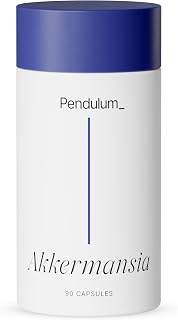
- Pendulum Akkermansia
delayed-release capsules, 100M AFU: Live A. muciniphila strain (WB-STR-0001); single-strain with chicory inulin, third-party tested. - Codeage Akkermansia Muciniphila
capsules, 100M AFU, 90 ct: Lower-cost Akkermansia plus chicory inulin synbiotic; 3-month supply, gluten-free. - Double Wood Akkermansia Probiotic + Postbiotic
capsules, per label: Budget Akkermansia option marketed around GLP-1 and postbiotic support.
As an Amazon Associate we earn from qualifying purchases. Akkermansia is a live, oxygen-sensitive strain: choose a delayed-release, third-party-tested product with a stated live AFU count.

A Note on the Evidence
The evidence on Akkermansia muciniphila in humans is promising but early: most trials have been small, short, and not primarily designed to measure weight loss. Akkermansia supplements are not FDA-approved to treat, cure, or prevent any disease, including obesity. Individuals who are immunocompromised, taking immunosuppressive therapy, or managing active inflammatory bowel disease should speak with a physician before beginning any probiotic regimen. This article is informational only and does not constitute medical advice.
Frequently Asked Questions
Can Akkermansia replace Ozempic for weight loss?
No. The evidence bases are at completely different stages, and the mechanisms operate at different magnitudes. Semaglutide has demonstrated average weight loss of approximately 15 percent of body weight in large controlled trials; Akkermansia human research is still in early pilot stages with modest weight changes. They are not substitutes.

Does Akkermansia actually increase GLP-1?
Cell and mouse research suggests Akkermansia components may stimulate enteroendocrine L-cells to secrete GLP-1, but a review calls the idea a hypothesis needing human proof, and an effect on appetite or weight loss in people has not been established [8][13][9]. Calling it a GLP-1 booster in the same breath as semaglutide is misleading.
Is pasteurized Akkermansia as effective as live bacteria?
Mouse studies disagree: some found pasteurized cells worked better than live ones, while one found viable cells were needed. In the 2019 human pilot only the pasteurized arm improved insulin sensitivity, and oxygen sensitivity is the stated reason for using inactive forms [10][12][4][14]. Pasteurization also improves shelf stability and may reduce risk for vulnerable populations. Both forms are sold, but most published human trial data is on pasteurized forms [14].
What does Akkermansia actually help with based on current evidence?
A 2019 pilot in 40 overweight or obese insulin-resistant adults found that a pasteurized preparation improved insulin sensitivity and lowered insulinemia and total cholesterol versus placebo; a larger 2026 trial in adults with metabolic syndrome did not meet its primary insulin-sensitivity endpoint [5][16][21]. Weight changes were secondary and modest. Larger trials are needed before strong conclusions can be drawn.
Who should not take Akkermansia supplements without talking to a doctor first?
Immunocompromised individuals, people on immunosuppressive medications, and those with active inflammatory bowel disease should consult a physician before taking any probiotic, including live Akkermansia formulations. Pasteurized versions carry less biological risk but medical guidance is still prudent in these populations.
Can diet raise Akkermansia levels naturally?
Most evidence that foods raise Akkermansia comes from mice, for example polyphenol-rich cranberry and green tea extracts; human diet trials that measured it are few, and inulin did not raise it in a type 1 diabetes trial [17][18][19][20]. These dietary strategies may be a practical complement to supplementation for supporting the gut microbiome environment Akkermansia needs to thrive.
References
- Derrien M et al. The Mucin degrader Akkermansia muciniphila is an abundant resident of the human intestinal tract. Applied and environmental microbiology (2008). PMID 18083887
- Derrien M et al. Akkermansia muciniphila gen. nov., sp. nov., a human intestinal mucin-degrading bacterium. International journal of systematic and evolutionary microbiology (2004). PMID 15388697
- Plovier H et al. A purified membrane protein from Akkermansia muciniphila or the pasteurized bacterium improves metabolism in obese and diabetic mice. Nature medicine (2017). PMID 27892954
- Everard A et al. Cross-talk between Akkermansia muciniphila and intestinal epithelium controls diet-induced obesity. Proceedings of the National Academy of Sciences of the United States of America (2013). PMID 23671105
- Depommier C et al. Supplementation with Akkermansia muciniphila in overweight and obese human volunteers: a proof-of-concept exploratory study. Nature medicine (2019). PMID 31263284
- William Timothy Garvey et al. Two-year effects of semaglutide in adults with overweight or obesity: the STEP 5 trial. Nature Medicine (2022). PMID 36216945
- Wilding JPH et al. Once-Weekly Semaglutide in Adults with Overweight or Obesity. The New England journal of medicine (2021). PMID 33567185
- Yoon HS et al. Akkermansia muciniphila secretes a glucagon-like peptide-1-inducing protein that improves glucose homeostasis and ameliorates metabolic disease in mice. Nature microbiology (2021). PMID 33820962
- Dulai AS et al. The Gut Microbiome's Influence on Incretins and Impact on Blood Glucose Control. Biomedicines (2024). PMID 39767626
- Fatemeh Ashrafian et al. Comparative effects of alive and pasteurized Akkermansia muciniphila on normal diet-fed mice. Scientific Reports (2021). PMID 34504116
- Peng M et al. Akkermansia muciniphila improves heat stress-impaired intestinal barrier function by modulating HSP27 in Caco-2 cells. Microbial pathogenesis (2023). PMID 36796737
- Fatemeh Ashrafian et al. Extracellular vesicles and pasteurized cells derived from Akkermansia muciniphila protect against high-fat induced obesity in mice. Microbial Cell Factories (2021). PMID 34863163
- Li Y et al. Peptide LKLKLL is a more effective component of Akkermansia muciniphila which regulate glucolipid metabolism through GLP-1/GIP dual modulation. Gut microbes (2026). PMID 42473065
- Liu Y et al. Pasteurized Akkermansia muciniphila as a candidate multi-effector pharmacological system in the gut-liver axis: evidence, unresolved causality, and translational priorities. Frontiers in pharmacology (2026). PMID 42846334
- EFSA Panel on Nutrition et al. Safety of an extension of use of pasteurised Akkermansia muciniphila as a novel food pursuant to Regulation (EU) 2015/2283. EFSA journal. European Food Safety Authority (2025). PMID 41018002
- European Food Safety Authority (NDA Panel) Safety of pasteurised Akkermansia muciniphila as a novel food pursuant to Regulation (EU) 2015/2283. European Food Safety Authority (NDA Panel) (2021). source
- Fernando F. Anhê et al. A polyphenol-rich cranberry extract protects from diet-induced obesity, insulin resistance and intestinal inflammation in association with increased Akkermansia spp. population in the gut microbiota of mice. Gut (2014). PMID 25080446
- Gurley BJ et al. Decaffeinated Green Tea Extract Does Not Elicit Hepatotoxic Effects and Modulates the Gut Microbiome in Lean B6C3F₁ Mice. Nutrients (2019). PMID 30987244
- Sanne Verhoog et al. Dietary Factors and Modulation of Bacteria Strains of Akkermansia muciniphila and Faecalibacterium prausnitzii: A Systematic Review. Nutrients (2019). PMID 31336737
- Ojetti V et al. Efficacy of inulin supplementation in metabolic control and Akkermansia muciniphila levels in subjects with type 1 diabetes: a pilot study. European review for medical and pharmacological sciences (2026). PMID 41636295
- Suenaert P et al. Effect of pasteurized Akkermansia muciniphila MucT on insulin sensitivity, body composition, and GLP-1 production in subjects with metabolic syndrome: impact of low baseline gut Akkermansia levels. Gut microbes (2026). PMID 42343233
- Mount S et al. Pasteurized Akkermansia muciniphila MucT for weight loss maintenance in people with overweight and obesity: a controlled randomized trial. Nature medicine (2026). PMID 42120725
- Marchetti M et al. Weight Regain After Discontinuation of GLP-1 and GIP/GLP-1 Receptor Agonists: A Systematic Review. Metabolites (2026). PMID 42941232
These statements have not been evaluated by the Food and Drug Administration. This information is not intended to diagnose, treat, cure, or prevent any disease. Content is for informational purposes only and is not medical advice; consult a qualified healthcare provider before starting any supplement. As an Amazon Associate we earn from qualifying purchases.