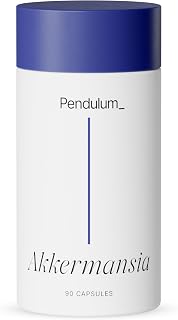
Akkermansia muciniphila supplements have moved from niche microbiome research into mainstream wellness retail over the past few years, and Pendulum is the brand most shoppers encounter first — typically alongside a price tag that gives pause. A single-ingredient Akkermansia product from Pendulum sits at the top of the category’s price range, while a growing field of competing products occupies a noticeably lower price tier. The natural question is whether that gap reflects a meaningful difference in what you are actually getting.
This article examines what separates the leading Akkermansia supplement brands across the dimensions that matter most: strain identity, viable cell count, formulation stability, manufacturing transparency, and the degree to which any brand’s specific product has been studied. Because Akkermansia muciniphila research is still early-stage and no supplement on the market is FDA-approved to treat or prevent any disease, the goal here is to give you an honest framework for comparison rather than a product endorsement.
Key Takeaways
- Pendulum’s premium reflects anaerobic manufacturing, cold-chain handling, strain disclosure, and third-party certification — real quality inputs that most competitors do not match.
- The clinical evidence behind any commercial Akkermansia supplement, including Pendulum’s, remains limited to small trials; no product is FDA-approved to treat or prevent disease.
- Multi-strain probiotic blends that include Akkermansia often provide no viability guarantees or strain identification, making their Akkermansia content difficult to assess.
- Dietary prebiotic fiber (inulin, pectin, arabinoxylan) is a well-documented way to support endogenous A. muciniphila growth and costs far less than supplementation.
- Whether the price gap between Pendulum and competitors is justified depends on whether your priority is quality assurance (Pendulum leads) or proven clinical outcomes (no brand leads definitively yet).
What Makes Akkermansia Supplementation Technically Difficult
Akkermansia muciniphila is a strict anaerobe, meaning it dies rapidly when exposed to oxygen. Culturing it at commercial scale, stabilizing live cells through encapsulation or freeze-drying, and then packaging and shipping a product that still contains viable organisms by the time it reaches the consumer is genuinely challenging. This technical barrier is one reason the Akkermansia supplement market remained sparse until very recently, and it is the core reason formulation quality varies so much between brands.
The proposed mechanism through which A. muciniphila may benefit host health involves several pathways: the bacterium degrades mucin in the intestinal lining, which paradoxically appears to stimulate mucin renewal and thicken the protective layer; it is thought to upregulate tight-junction proteins that maintain barrier integrity; and the outer-membrane protein Amuc_1100 has been identified as potentially capable of interacting with host immune receptors and stimulating GLP-1 secretion, a hormone involved in insulin regulation and appetite signaling. Whether a given supplement actually delivers enough viable or bioactive material to engage these pathways is the central question any brand comparison must address.
Some researchers have also explored whether heat-pasteurized (non-live) Akkermansia could retain activity, since Amuc_1100 is thought to be heat-stable. This distinction — live versus pasteurized — divides the product landscape and carries real implications for what mechanism, if any, might be operative in a given supplement.
Pendulum Akkermansia: What the Brand Offers
Pendulum is a San Francisco-based precision probiotic company founded with backing from academic microbiome researchers. Their Akkermansia product contains live Akkermansia muciniphila, claims a specific proprietary strain designation, and uses an anaerobic manufacturing process the company says preserves viability. Capsules are sold with a recommended refrigeration protocol, and the company publishes a certificate of analysis for colony-forming unit count at time of manufacture.

Pendulum has conducted or supported a small number of human trials, primarily in individuals with type 2 diabetes or metabolic dysfunction, examining markers like hemoglobin A1c, fasting glucose, and postprandial glucose excursions. These trials are notable because they involve the actual commercial product rather than raw bacterial cultures, which is uncommon in the probiotic industry. However, the trials are small, some are company-funded, and independent replication is limited. Pendulum’s transparency about strain identity and CFU counts is a genuine differentiator from most competitors, but it does not by itself confirm that their product outperforms alternatives at clinical endpoints.
Pendulum’s monthly cost depends on the bundle selected and on whatever promotion is running at the time; the live product page carries the current figure. The company positions this as a specialty medical probiotic rather than a general wellness supplement, which informs both the pricing and the marketing language around metabolic health.
Competing Brands and What They Typically Offer
The Akkermansia supplement market now includes a range of products at multiple price points. Some European brands, including formulations developed closer to the original academic research on A. muciniphila, sell pasteurized preparations — the rationale being that heat-stable proteins like Amuc_1100 may retain activity without requiring live-cell viability. These pasteurized products sometimes carry lower price points and face fewer cold-chain logistics challenges, but they also rely on a mechanism hypothesis that remains less fully established in human trials than the live-bacteria model.
A number of general probiotic brands have added Akkermansia to multi-strain formulas. These products are often the lower-cost, but they typically provide no strain-level identification, no anaerobic manufacturing disclosure, and CFU counts that may be set at manufacture rather than at expiry. Without knowing whether A. muciniphila in a multi-strain capsule survives the manufacturing and storage process in meaningful numbers, it is difficult to assess what, if anything, the consumer is actually getting.
A small number of newer direct-to-consumer brands occupy a middle ground: single-strain or dual-strain products with disclosed CFU counts, refrigerated shipping, and pricing that sits between the budget multi-strain blends and Pendulum’s tier. These brands vary significantly in whether they publish certificates of analysis, disclose strain identifiers, or have any human trial data behind their specific formulation.
Key Criteria for Comparing Akkermansia Products
Strain identity is the first meaningful comparison point. Akkermansia muciniphila is a species with internal genetic variation, and different strains may behave differently. Pendulum discloses a strain designation. Many competitors do not. Without a strain identifier, a consumer cannot assess whether a product bears any relationship to strains studied in published research.

CFU count at expiry, not just at manufacture, matters because probiotics lose viability over time. A product that lists 10 billion CFU at manufacture but has no stability data may deliver a fraction of that by the time it is consumed. Ask whether the brand guarantees CFU at the end of shelf life and whether that guarantee is backed by third-party testing.
Manufacturing conditions are critical for an obligate anaerobe. Any brand selling live A. muciniphila that does not disclose anaerobic manufacturing processes is offering minimal quality assurance for the most perishable part of the product. Cold-chain shipping and storage instructions are a downstream indicator of whether the company understands and accounts for this instability.
Third-party testing and certification — NSF, USP, Informed Sport, or equivalent — provides independent verification that a product contains what it claims and is free from contaminants. Pendulum holds third-party certifications. Many lower-cost competitors do not, which is not automatically disqualifying but does shift the burden of trust onto brand reputation alone.
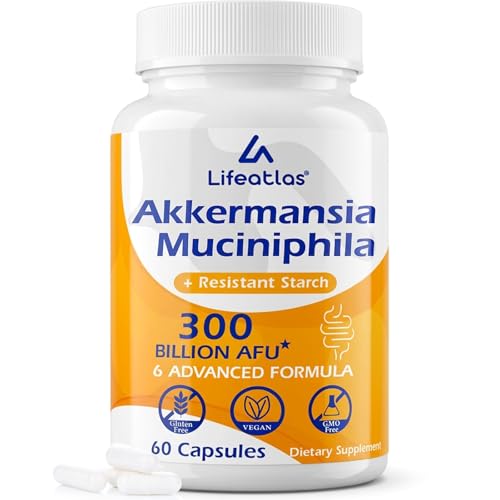
Is the Price Premium Justified? An Honest Assessment
Pendulum’s premium reflects real inputs: anaerobic manufacturing, cold-chain logistics, strain-specific research investment, and third-party certification. For a consumer whose primary concern is metabolic health and who wants the closest commercially available approximation to the A. muciniphila products studied in clinical settings, Pendulum is currently the most documented option in the United States. That documentation is thin by pharmaceutical standards, but it is more than most competitors offer.
For a consumer primarily interested in general gut microbiome support, the case for the premium weakens. The evidence that any commercially available Akkermansia supplement reliably produces measurable clinical benefits in healthy individuals is not established. Dietary approaches — notably eating prebiotic fibers such as inulin, pectin, and arabinoxylan that A. muciniphila preferentially ferments — are well-supported pathways for increasing endogenous A. muciniphila abundance and carry no cost beyond food choices.
The honest answer is that the price premium buys better-documented quality assurance, not proven superiority in outcomes. If you are making a supplement purchase decision primarily on quality assurance, Pendulum has a defensible lead. If you are weighing cost against demonstrated clinical benefit in healthy adults, no Akkermansia supplement at any price point currently has that evidence base firmly in place.
What Consumers Should Watch for as the Market Evolves
The Akkermansia supplement market is growing quickly, and the regulatory and research landscape is shifting. Several independent academic groups are conducting or completing human trials of A. muciniphila preparations, and results from those trials over the next two to three years will either strengthen or complicate the category’s clinical story. Consumers who purchase Akkermansia supplements now are, in a meaningful sense, early adopters of a product category whose full evidence picture is not yet written.

One practical development to watch is the emergence of postbiotic Akkermansia products — formulations built around Amuc_1100 or other purified bacterial components rather than whole cells. If the heat-stable protein mechanism proves to be the primary route of action in humans, postbiotic formulations could offer stability and cost advantages over live preparations without sacrificing efficacy. No postbiotic Akkermansia product has established clinical evidence in humans sufficient to evaluate this yet, but the science is active.
Consumers should also be cautious about brands that add Akkermansia to broad multi-strain probiotic blends at low doses without viability guarantees. In that format, the Akkermansia content may be largely decorative — present on the label, not present in meaningful concentrations in the capsule.
🛒 Where to Buy Akkermansia muciniphila
- Pendulum AkkermansiaLab-tested / studied
delayed-release capsules, 100M AFU — The only patented live A. muciniphila strain (WB-STR-0001); single-strain with chicory inulin, third-party tested. - Codeage Akkermansia Muciniphila
capsules, 100M AFU, 90 ct — Lower-cost Akkermansia plus chicory inulin synbiotic; 3-month supply, gluten-free. - Double Wood Akkermansia Probiotic + Postbiotic
capsules, per label — Budget Akkermansia option marketed around GLP-1 and postbiotic support.
As an Amazon Associate we earn from qualifying purchases. Akkermansia is a live, oxygen-sensitive strain — choose a delayed-release, third-party-tested product with a stated live AFU count.

A Note on the Evidence
The human evidence base for Akkermansia muciniphila supplements is still early-stage, consists largely of small trials, and has not yet produced the volume of independent replication needed to establish firm clinical recommendations for any product or brand. No Akkermansia supplement is FDA-approved to diagnose, treat, cure, or prevent any disease. Immunocompromised individuals, those on immunosuppressive therapy, and people with active inflammatory bowel disease should consult a qualified healthcare provider before using any live probiotic preparation.
Frequently Asked Questions
Does Pendulum Akkermansia contain live bacteria?
Pendulum states that their product contains live Akkermansia muciniphila produced under anaerobic manufacturing conditions. They recommend refrigeration to maintain viability. Whether every capsule that reaches a consumer contains the labeled CFU count depends on adherence to cold-chain handling throughout shipping and storage.
What is the difference between live and pasteurized Akkermansia supplements?
Live formulations contain viable A. muciniphila cells capable of colonizing or transiently interacting with the gut. Pasteurized formulations are heat-treated and contain no living bacteria, but may retain heat-stable proteins like Amuc_1100 that could interact with host receptors. The relative clinical value of live versus pasteurized preparations in humans has not been definitively established.
Can I increase my Akkermansia levels without supplements?
Yes. A. muciniphila preferentially ferments prebiotic fibers including inulin (found in chicory, garlic, and onion), pectin (apples, citrus), and arabinoxylan (whole wheat, oats). Regular consumption of these foods and reduction of ultra-processed food intake are associated with higher A. muciniphila abundance in observational studies.
Are there safety concerns with Akkermansia supplements?
For healthy adults, short-term use of A. muciniphila supplements appears to have been well tolerated in published trials. However, individuals who are immunocompromised, taking immunosuppressive medications, or managing active inflammatory bowel disease should consult a physician before use, as live probiotic products carry theoretical risk in those populations. This applies to Pendulum and all competing live formulations.

Why is Pendulum so much more expensive than other Akkermansia products?
Pendulum’s pricing reflects the technical costs of anaerobic manufacturing, refrigerated logistics, strain-specific research investment, and third-party certification programs. Many cheaper competitors do not publish strain identifiers, manufacturing conditions, or independent viability testing, so the price gap partly reflects actual quality infrastructure and partly reflects brand positioning.
Should someone with type 2 diabetes consider an Akkermansia supplement?
Some small human trials have examined A. muciniphila preparations in individuals with type 2 diabetes and reported changes in fasting glucose and other metabolic markers. However, these trials are small, some are industry-funded, and Akkermansia supplements are not a substitute for prescribed diabetes management. Anyone with a diagnosed metabolic condition should discuss any supplement addition with their physician before starting.
These statements have not been evaluated by the Food and Drug Administration. This information is not intended to diagnose, treat, cure, or prevent any disease. Content is for informational purposes only and is not medical advice; consult a qualified healthcare provider before starting any supplement. As an Amazon Associate we earn from qualifying purchases.