Akkermansia muciniphila has attracted growing scientific interest as a gut bacterium linked to metabolic health, but the question of how it exerts its effects has been harder to answer. A key candidate emerged in 2017: Amuc_1100, a specific outer membrane protein expressed by A. muciniphila that appears to survive pasteurization and may activate immune-signaling pathways in the gut lining independently of the live bacterium itself.
Understanding Amuc_1100 matters because it shifts the conversation from ‘probiotic bacteria’ to a more targeted question about which molecular components of A. muciniphila are doing biologically meaningful work. This article reviews what is currently known about Amuc_1100’s proposed mechanisms, the metabolic and immune findings from animal and early human research, and the honest limitations of what this evidence can and cannot support.
Key Takeaways
- Amuc_1100 is a heat-stable outer membrane protein of Akkermansia muciniphila proposed to interact with host TLR2 receptors, potentially supporting gut barrier integrity and modulating immune signaling [1].
- Preclinical studies suggest purified Amuc_1100 alone can reproduce several metabolic effects attributed to the whole bacterium, including improvements in insulin sensitivity and gut barrier markers in mouse models [1][2].
- Because Amuc_1100 survives pasteurization, heat-killed A. muciniphila preparations may retain meaningful biological activity, which has implications for safer supplement formulation [3].
- Amuc_1100 has been linked to immune modulation including CD8+ T cell activity in animal cancer models, but contextual factors matter — one systematic review also flags potential pathobiont considerations for A. muciniphila in colorectal cancer [4][5].
- Most evidence remains preclinical; robust human trials specifically isolating Amuc_1100’s effects are still limited, and this protein should be understood as a research target, not an established therapeutic agent.
What Is Amuc_1100? Structure and Origin
Amuc_1100 is a pilus-related outer membrane protein uniquely expressed on the surface of Akkermansia muciniphila. It belongs to a class of type IV pili-associated proteins and is found anchored in the outer membrane layer of the bacterium, where it faces the intestinal environment directly. A 2025 review describes Amuc_1100 as a multifunctional protein whose structural features enable it to interact with host cell receptors, modulate inflammatory signaling, and contribute to the organism’s ability to colonize the mucus layer [3].
One of its most practically significant properties is thermal stability. Unlike many probiotic-associated molecules that are inactivated by heat, Amuc_1100 retains its functional structure after pasteurization at 70°C for 30 minutes. This observation was central to research showing that pasteurized A. muciniphila — which cannot colonize or replicate — can still produce metabolic effects in preclinical models, likely because Amuc_1100 survives the process intact [1].
Proposed Gut Barrier Mechanism: TLR2 Signaling and Tight Junctions
The gut barrier is a single-cell-thick epithelial layer held together by tight-junction proteins. When this barrier is compromised — a state sometimes called ‘leaky gut’ — bacterial endotoxins can translocate into circulation and trigger systemic low-grade inflammation. Amuc_1100 is proposed to interact specifically with Toll-like receptor 2 (TLR2) on intestinal epithelial cells, a pattern-recognition receptor involved in immune tolerance and barrier maintenance [1].
TLR2 activation by Amuc_1100 appears to differ from the inflammatory TLR4 pathway activated by lipopolysaccharide (LPS), the endotoxin associated with gut dysbiosis and metabolic inflammation. In mouse models of obesity and diet-induced metabolic disruption, treatment with purified Amuc_1100 was associated with improved gut barrier function as measured by reduced plasma LPS levels and changes in tight-junction gene expression [1]. Separately, pili-like surface proteins from A. muciniphila more broadly have been shown to modulate host immune responses and gut barrier function in cell and animal studies [6], suggesting that outer membrane components as a class may contribute to this organism’s effects on mucosal integrity.

Metabolic Effects: Insulin Sensitivity, Glucose, and Lipid Metabolism
Preclinical evidence for Amuc_1100’s metabolic effects comes primarily from high-fat diet mouse models. In the pivotal 2017 study, mice treated with either purified Amuc_1100 or pasteurized A. muciniphila showed improvements in fat mass, insulin resistance, and markers of metabolic endotoxemia compared to controls receiving live bacteria or a vehicle. The purified protein alone was sufficient to reproduce several — though not all — of the effects seen with the whole bacterium, pointing to Amuc_1100 as a key active component [1].
A 2023 study using an Amuc_1100-enriched preparation in high-fat-diet mice reported attenuation of metabolic disorders associated with changes in fatty acid metabolism, bile acid profiles, and gut microbiota composition [2]. More recently, pasteurized A. muciniphila was shown to reduce placental inflammation and improve insulin resistance in a mouse model of gestational diabetes mellitus, with the researchers proposing that the heat-stable outer membrane components, including Amuc_1100, were responsible for the observed effects [7]. It bears emphasis that these are animal studies; translating effect sizes and mechanisms directly to human physiology requires caution.
Pasteurized Akkermansia: Why Heat Treatment Does Not Eliminate the Effect
The discovery that pasteurized A. muciniphila could match or exceed the effects of its live counterpart in some preclinical outcomes was unexpected and has practical implications for supplement formulation. Live gram-negative bacteria carry regulatory and safety concerns, particularly for individuals with compromised immune systems. A heat-killed or pasteurized preparation, if functionally equivalent, offers a potentially safer delivery format.
The explanation for this equivalence centers on Amuc_1100’s thermal stability. Because the protein retains its three-dimensional structure and receptor-binding capacity after pasteurization, the signaling interaction with host TLR2 can still occur even when the bacterium itself is no longer viable [1]. This has been confirmed in broader reviews of the protein’s properties [3]. Whether the same holds in human gut conditions — with bile salts, digestive enzymes, and transit time — remains an important open question that current evidence does not fully resolve.
Immune Modulation: CD8+ T Cells, Colorectal Cancer Context, and Anti-Tumor Immunity
Beyond metabolic effects, Amuc_1100 and pasteurized A. muciniphila have been studied in the context of gut immune regulation. In a mouse model of colitis-associated tumorigenesis, treatment with purified Amuc_1100 or pasteurized A. muciniphila was associated with blunted tumor development, and the researchers identified modulation of CD8+ cytotoxic T cell activity as a contributing mechanism [4]. CD8+ T cells are critical effectors in anti-tumor immunity, and the finding that an outer membrane protein might influence this compartment is mechanistically interesting.
In the context of checkpoint immunotherapy, research has found that gut Akkermansia muciniphila correlates with enhanced response to anti-PD-1 therapy in certain cancer types, with proposed mechanisms involving the tumor microenvironment and immune cell infiltration [8]. These findings are observational and mechanistic in nature, not clinical recommendations. It is equally important to note that a 2025 systematic review examined the potential ‘pathobiont’ role of A. muciniphila in colorectal cancer, raising the possibility that context, microbiome composition, and host immune state may determine whether the organism behaves protectively or otherwise [5]. This nuance underscores that a bacterium’s role is rarely straightforwardly beneficial or harmful across all conditions.

Emerging Areas: Oxidative Stress, Gut-Brain Signaling, and Research Gaps
Preclinical and early mechanistic work has begun exploring whether Amuc_1100 and A. muciniphila more broadly influence pathways beyond metabolism and immunity. A 2025 review proposed that A. muciniphila functions as a ‘microbial guardian’ against oxidative stress by influencing gut microbiota composition and redox-related signaling pathways, though the direct contribution of Amuc_1100 specifically to these effects is not yet established [9].
A separate 2024 paper explored the possible application of A. muciniphila preparations in stress management, noting connections between gut microbiota composition, the gut-brain axis, and stress-related physiological responses [10]. These are early-stage proposals, and the research does not yet support specific clinical recommendations. The field’s main challenge is that most Amuc_1100 research to date has been conducted in rodent models; well-powered, placebo-controlled human trials that isolate Amuc_1100’s contribution specifically are limited, and more work is needed to understand dose, timing, and which populations may benefit most.
🛒 Where to Buy Akkermansia muciniphila
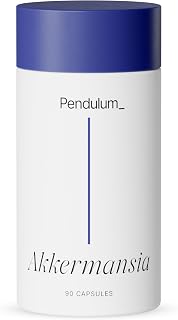
- Pendulum AkkermansiaLab-tested / studied
delayed-release capsules, 100M AFU — The only patented live A. muciniphila strain (WB-STR-0001); single-strain with chicory inulin, third-party tested. - Codeage Akkermansia Muciniphila
capsules, 100M AFU, 90 ct — Lower-cost Akkermansia plus chicory inulin synbiotic; 3-month supply, gluten-free. - Double Wood Akkermansia Probiotic + Postbiotic
capsules, per label — Budget Akkermansia option marketed around GLP-1 and postbiotic support.
As an Amazon Associate we earn from qualifying purchases. Akkermansia is a live, oxygen-sensitive strain — choose a delayed-release, third-party-tested product with a stated live AFU count.
A Note on the Evidence
The evidence reviewed here is predominantly from animal studies and early mechanistic research; robust, large-scale human trials specifically evaluating purified Amuc_1100 are limited, and no Akkermansia muciniphila supplement is FDA-approved to treat, cure, or prevent any disease. Individuals who are immunocompromised, taking immunosuppressive medications, pregnant, or living with active inflammatory bowel disease or cancer should consult a qualified healthcare provider before using any A. muciniphila or related probiotic preparation.
Frequently Asked Questions
What receptor does Amuc_1100 bind to and why does that matter?
Amuc_1100 is proposed to interact with Toll-like receptor 2 (TLR2) on intestinal epithelial cells. TLR2 activation by Amuc_1100 is thought to promote a tolerogenic rather than inflammatory immune response, potentially supporting tight-junction integrity and reducing bacterial endotoxin translocation into circulation [1]. This is mechanistically distinct from the pro-inflammatory TLR4 pathway activated by LPS.

Does pasteurization destroy Amuc_1100's activity?
No — one of Amuc_1100’s notable properties is its thermal stability. Research found that pasteurized A. muciniphila retains the ability to produce metabolic effects in mouse models, and a 2025 review confirmed that Amuc_1100 maintains its structural and functional integrity after heat treatment [1][3]. This is why pasteurized formulations have attracted interest as a potentially safer alternative to live bacterial preparations.
Has Amuc_1100 been studied in humans?
Human clinical data specifically isolating Amuc_1100 is limited. The most cited clinical work involves pasteurized A. muciniphila as a whole preparation in metabolic syndrome patients rather than purified Amuc_1100 alone. Most mechanistic evidence for Amuc_1100 specifically comes from cell-culture and mouse studies [1][2]. Human trials are ongoing, but definitive conclusions about the protein’s effects in people cannot yet be drawn.

Is there any concern that Akkermansia muciniphila could be harmful?
Context matters considerably. A 2025 systematic review examined evidence that A. muciniphila may act as a pathobiont in colorectal cancer under certain conditions, raising the possibility that the bacterium’s role is not uniformly protective and may depend on host immune state and microbiome composition [5]. This does not mean supplementation is broadly harmful, but it reinforces why individuals with active inflammatory bowel disease, immunosuppression, or cancer should consult a physician before use.
How might Amuc_1100 relate to GLP-1 and metabolic hormones?
Akkermansia muciniphila and its components, including Amuc_1100, have been proposed to influence enteroendocrine signaling, including pathways relevant to GLP-1 secretion. In mouse models, improvements in gut barrier function associated with Amuc_1100 treatment correlated with changes in metabolic hormone profiles and reduced endotoxemia [1]. Whether Amuc_1100 directly stimulates GLP-1-producing L-cells or acts indirectly through barrier and microbiome changes is not fully resolved.
Can Amuc_1100 affect the immune response to cancer therapies?
Preclinical evidence suggests a connection. In mouse colitis-tumor models, treatment with purified Amuc_1100 or pasteurized A. muciniphila was associated with reduced tumor burden and modulation of CD8+ T cell responses [4]. Separately, higher gut Akkermansia abundance has been associated with better responses to anti-PD-1 checkpoint immunotherapy in observational studies [8]. These are early mechanistic findings, not clinical guidance, and cancer patients should not adjust treatment based on probiotic use without oncologist involvement.
References
- Plovier H et al. A purified membrane protein from Akkermansia muciniphila or the pasteurized bacterium improves metabolism in obese and diabetic mice. Nature medicine (2017). PMID 27892954
- Song Z et al. Amuc attenuates high-fat diet-induced metabolic disorders linked to the regulation of fatty acid metabolism, bile acid metabolism, and the gut microbiota in mice. International journal of biological macromolecules (2023). PMID 37119914
- Wu X et al. Function and therapeutic potential of Amuc_1100, an outer membrane protein of Akkermansia muciniphila: A review. International journal of biological macromolecules (2025). PMID 40157674
- Wang L et al. A purified membrane protein from Akkermansia muciniphila or the pasteurised bacterium blunts colitis associated tumourigenesis by modulation of CD8(+) T cells in mice. Gut (2020). PMID 32169907
- Soheilipour M et al. The pathobiont role of Akkermansia muciniphila in colorectal cancer: a systematic review. BMC gastroenterology (2025). PMID 41062951
- Ottman N et al. Pili-like proteins of Akkermansia muciniphila modulate host immune responses and gut barrier function. PloS one (2017). PMID 28249045
- Wang Y et al. Pasteurized Akkermansia muciniphila ameliorates insulin resistance by reducing placental inflammation in GDM mouse model. Reproductive biology (2025). PMID 40912181
- Zhu Z et al. Landscape of tumoral ecosystem for enhanced anti-PD-1 immunotherapy by gut Akkermansia muciniphila. Cell reports (2024). PMID 38819989
- Ye WY et al. Akkermansia muciniphila: a microbial guardian against oxidative stress-gut microbiota crosstalk and clinical prospects. Journal of translational medicine (2025). PMID 41137026
- Misera A et al. Possible application of Akkermansia muciniphila in stress management. Microbiome research reports (2024). PMID 39741949
These statements have not been evaluated by the Food and Drug Administration. This information is not intended to diagnose, treat, cure, or prevent any disease. Content is for informational purposes only and is not medical advice; consult a qualified healthcare provider before starting any supplement. As an Amazon Associate we earn from qualifying purchases.