When consumers evaluate an Akkermansia muciniphila supplement, they typically focus on the CFU count on the label, the brand’s reputation, or the research cited in marketing copy. What most people overlook entirely is the variable with the most direct influence on whether any live bacteria reach the gut at all: the temperature history of the product from the moment it was manufactured to the moment it was swallowed.
Akkermansia muciniphila is oxygen sensitive and was originally described as a strict anaerobe, though later lab work found it tolerates some oxygen [3][2]. It is also more temperature-sensitive than some hardier probiotic strains: in a head-to-head freeze-drying and storage comparison, microencapsulated Akkermansia survived significantly better at 4 °C than at 25 °C, while microencapsulated Lactobacillus plantarum was relatively stable at both temperatures[3]. This combination of properties makes cold chain management (the unbroken sequence of refrigerated handling across manufacturing, warehousing, shipping, retail, and consumer storage) not a logistical nicety but a biological prerequisite. Understanding why that is, and how to evaluate whether a product has maintained it, is the most practical thing a prospective buyer can know.
Key Takeaways
- Akkermansia muciniphila is oxygen-sensitive and heat-sensitive, though more oxygen tolerant than its original ‘strict anaerobe’ description implied, so cold chain integrity is what gives a live formulation a measurable shelf life, not merely a packaging preference.
- Every link in the supply chain (manufacturing, warehousing, shipping, retail, and home storage) represents a potential point of viability loss, and the cumulative effect of multiple excursions can be severe.
- Pasteurized Akkermansia eliminates cold chain dependency but delivers no live organisms; whether this is equivalent to live preparations for proposed outcomes has not been definitively established by research.
- CFU labeling standards vary: ‘at time of manufacture’ and ‘at end of shelf life’ claims represent fundamentally different potency guarantees, and the distinction matters most for heat-sensitive species.
- Independently verified Certificates of Analysis, validated insulated shipping, and published end-of-shelf-life testing data are the most meaningful quality indicators available to consumers evaluating live Akkermansia products.
What Makes Akkermansia Muciniphila Biologically Fragile
Akkermansia muciniphila is a gram-negative, oxygen-sensitive bacterium (originally described as strictly anaerobic) that colonizes [2] the mucus layer of the large intestine. Its natural habitat is a tightly controlled environment: low oxygen, stable temperature near 37°C, and a substrate of intestinal mucins. When removed from that environment and placed into a supplement capsule, the organism faces several simultaneous stressors: ambient oxygen, variable temperatures, and the absence of its nutritional substrate.
In the lab, encapsulated Akkermansia lost far less viability over 28 days of cold storage than free cells
Protection in the lab kept far more cells alive, which is why storage and packaging matter for live products.
Laboratory (in vitro) bacterial culture tests, not human data and not a test of any specific supplement. Source: Machado et al., Gels (Basel, Switzerland) 2023; Barbosa et al., Pharmaceuticals (Basel, Switzerland) 2022
Data table
| Item | Value |
|---|---|
| Calcium-alginate encapsulated | 0.2log-cycles lost |
| Free (unprotected) cells | 1.0log-cycles lost |
| Spray-dried in a dairy matrix | 1.0log-cycles lost |
Embed this chart
Free to reuse on your site. Copy the code below; please keep the credit link.
That description needs one correction, because it is the part most often overstated. Akkermansia muciniphila was originally characterised as strictly anaerobic[1], but a 2016 study found the organism is in fact oxygen tolerant: under aerated conditions its growth rate and yield were higher than under strict anaerobic conditions, it expressed a cytochrome bd complex capable of acting as a terminal oxidase, and it can use oxygen when present at nanomolar concentrations[2]. Brief contact with air is therefore not instantly bactericidal. What the storage literature shows instead is a slower, cumulative decline: calcium-alginate-encapsulated Akkermansia lost less than 0.2 log-cycle of viability across 28 days of refrigerated aerobic storage, holding around 108 CFU/g[4], and spray-dried cells in a skim-milk matrix held roughly 107 CFU/g for 28 days at 4 °C under aerobic conditions[5]. Encapsulation technology, manufacturing atmosphere control, and packaging materials are critical engineering decisions precisely because they are what converts an oxygen-sensitive organism into a product with a measurable shelf life, not because the bacterium dies the moment a bottle is opened.
Temperature adds a second axis of vulnerability. At elevated temperatures, cellular membranes become more permeable, proteins denature, and metabolic processes that the organism cannot sustain outside the gut begin to consume internal energy reserves. The result is a time-temperature relationship: the warmer the storage environment and the longer the exposure, the steeper the decline in viable colony-forming units (CFUs). This is not a defect unique to Akkermansia, it applies to all live probiotics, but one lab study of microencapsulated cells found Akkermansia survived significantly better when stored at 4 °C [3].

The Cold Chain Defined: Every Link Matters
The term ‘cold chain’ refers to the continuous maintenance of a specified low-temperature environment across an entire supply chain. For pharmaceutical and probiotic products, this typically means consistent storage and transport at 2 to 8°C (refrigerated) or below -18°C (frozen), depending on the product specification. A cold chain is only as strong as its weakest link. A product that is manufactured at -80°C, shipped refrigerated, and then sits on a warm loading dock for four hours before warehouse intake has been compromised, even if every other step was executed perfectly.
Research note: Authors note that A. muciniphila is sensitive to oxygen, and that reduced efficacy during administration has led to suggestions to use its inactive form or derivatives instead of the live form [15].

For Akkermansia supplements specifically, the relevant cold chain links include: (1) post-fermentation handling and centrifugation at the manufacturing facility; (2) the freeze-drying or lyophilization process, if used to convert the culture into a shelf-stable powder; (3) encapsulation and packaging under controlled atmosphere; (4) cold storage at the distribution warehouse; (5) refrigerated or insulated shipping to retailers or directly to consumers; (6) retail shelf conditions; and finally (7) consumer home storage. Each transition point is an opportunity for an excursion: an unplanned deviation above the specified temperature range.
Excursions are common in real-world supplement logistics. Standard parcel carriers do not maintain refrigeration. Summer heat inside a delivery truck or mailbox can easily reach 50 to 60°C. A product labeled ‘keep refrigerated’ that travels via standard ground shipping in July may be exposed to conditions lethal to live bacteria before it ever reaches the consumer’s doorstep. Manufacturers who ship live Akkermansia without validated insulated packaging are, in effect, delivering a product whose viability cannot be guaranteed.
Live Versus Pasteurized Akkermansia: A Fork in the Road
One response to the cold chain problem is to sidestep it entirely by using pasteurized, or heat-killed, Akkermansia. Pasteurized preparations are exposed to controlled heat that kills the living cells but preserves certain structural components: notably the outer membrane protein Amuc_1100, which was shown in mice to interact with Toll-like receptor 2 [6], to be stable at the temperatures used for pasteurization, and to improve the gut barrier[6]. Pasteurized products are shelf-stable at room temperature and require no cold chain, eliminating the viability question by design.
The tradeoff is that pasteurized Akkermansia delivers no live organisms. Whatever biological effects depend on active colonization, metabolic activity within the gut, or the production of metabolites in situ are, by definition, absent. Early human research has explored both live and pasteurized preparations, and the question of whether the two deliver equivalent outcomes, or whether live bacteria provide additional benefits, has not been definitively resolved. What has been measured is narrower: in the one published human pilot trial to test both, 1010 cells per day of live or pasteurized Akkermansia for three months was safe and well tolerated, and it was the pasteurized arm that improved insulin sensitivity (+28.62 ± 7.02%, P = 0.002)[7]; a 2025 systematic review of colorectal-cancer models reported a sharper version of the same asymmetry, with non-viable preparations consistently anti-tumorigenic while live Akkermansia could be pro-tumorigenic in inflammatory or post-antibiotic contexts[9]. Neither result settles the question for metabolic outcomes in healthy adults. For consumers choosing between formulations, this is not a settled debate, and honest marketing should acknowledge it rather than assert equivalence or superiority without supporting evidence.
The EU authorization of 2022 covers pasteurized Akkermansia, and EFSA required its viable count to be under 10 CFU/g. In the one human pilot that tested both forms, only the pasteurized arm improved insulin sensitivity [12][13][14].
From a practical standpoint, the choice between live and pasteurized is also a choice about what quality signals to trust. For live products, the relevant question is cold chain documentation. For pasteurized products, the relevant question is whether the heat treatment was validated to preserve the biologically proposed active components without degrading them. Neither question is trivial, and neither can be answered from a supplement label alone.

How to Evaluate Cold Chain Integrity Before Purchasing
The most reliable indicator of cold chain commitment is shipping method. A live Akkermansia product shipped in an insulated box with ice packs or dry ice, with a validated temperature indicator inside the package, signals that the manufacturer has invested in maintaining viability through the last-mile delivery phase: historically the most difficult link to control. A live product shipped in a standard bubble mailer with no temperature protection is a red flag regardless of what the label claims.
Third-party testing is a second meaningful signal. Reputable manufacturers of live probiotic products conduct end-of-shelf-life testing to verify that CFU counts remain within label claims at the product’s expiration date under recommended storage conditions. This is distinct from testing the product immediately after manufacture, when viability is highest. End-of-shelf-life data is demanding to produce and expensive to maintain, which is why many brands do not publish it, but its absence means that the CFU claim on the label is a snapshot from the best possible moment, not a guarantee of what the consumer receives.
Certificates of Analysis (CoAs) from accredited third-party microbiology laboratories provide a concrete point of verification. A CoA should specify the testing methodology (plate count, qPCR, or flow cytometry), the lot number, the test date, and the CFU result. When a company makes CoAs publicly available or provides them on request, it is demonstrating that it can substantiate its potency claims with data rather than assertion.
Home Storage: What Consumers Can and Cannot Control
Once a live Akkermansia product arrives at the consumer’s home, the cold chain becomes the consumer’s responsibility. The practical requirements are straightforward: keep the product refrigerated at 2 to 8°C, minimize the time the container spends at room temperature during daily use, keep the container sealed to limit oxygen ingress, and use the product before the expiration date. These steps do not recover viability that was lost during shipping, but they do prevent further degradation.
Common mistakes include storing supplements in the refrigerator door, where temperature fluctuates more than in the main body of the refrigerator; leaving the bottle on a kitchen counter during morning routines that extend beyond a few minutes; and continuing to use a product well past its expiration date on the assumption that ‘some bacteria are probably still alive.’ These are not hypothetical risks: they are routine consumer behaviors that meaningfully accelerate CFU decline.
Freezing is generally not recommended for finished probiotic capsules unless the manufacturer explicitly validates the product for frozen storage. The freeze-thaw cycle can damage capsule integrity and may stress any remaining live cells. If a consumer anticipates not using a product for several months and wants to extend its usable life, contacting the manufacturer to ask whether frozen storage is validated for that specific formulation is more reliable than assuming it is safe.

The CFU Claim Gap: Label Potency Versus Delivered Potency
CFU labeling in the probiotic industry is poorly standardized in ways that matter directly to the cold chain question. Some manufacturers state CFU counts ‘at time of manufacture,’ which is the maximum viability the product will ever have and which declines from that point forward. Others state CFU counts ‘at end of shelf life,’ meaning the count on the label is what they guarantee you will receive if storage conditions are maintained. These are very different claims, and many labels do not specify which applies.
For a species as storage-sensitive as Akkermansia, the difference between these two labeling conventions can be substantial. A product with 10 billion CFU at manufacture that loses 90% of its viability during an uncontrolled supply chain delivers roughly 1 billion CFU: a tenfold difference. Whether that matters clinically depends on the dose-response relationship for Akkermansia, which has not been established in large human trials. But it is precisely the kind of hidden variable that makes comparing products across brands based on label CFU counts an unreliable exercise.
Consumers who want to make an informed purchasing decision should look for manufacturers who specify ‘at end of shelf life’ potency, back that claim with independently verified CoAs, use validated insulated cold-chain shipping for live formulations, and are transparent about the testing methodology used to enumerate viable cells. These features are not universal, and their presence or absence is a more reliable quality signal than the CFU number itself.
🛒 Where to Buy Akkermansia muciniphila
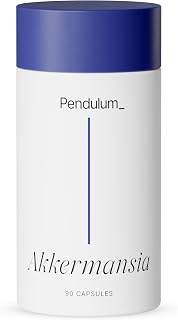
- Pendulum Akkermansia
delayed-release capsules, 100M AFU: Live A. muciniphila strain (WB-STR-0001); single-strain with chicory inulin, third-party tested. - Codeage Akkermansia Muciniphila
capsules, 100M AFU, 90 ct: Lower-cost Akkermansia plus chicory inulin synbiotic; 3-month supply, gluten-free. - Double Wood Akkermansia Probiotic + Postbiotic
capsules, per label: Budget Akkermansia option marketed around GLP-1 and postbiotic support.
As an Amazon Associate we earn from qualifying purchases. Akkermansia is a live, oxygen-sensitive strain: choose a delayed-release, third-party-tested product with a stated live AFU count.

Signs a Product's Viability May Have Been Compromised
Visual or physical changes are not always reliable indicators of viability loss in bacterial supplements because dead cells often look identical to live ones. However, certain signs warrant caution. If the package arrived clearly warm to the touch, if the ice packs had fully melted and reached room temperature, or if the outer packaging was damaged in a way that could have allowed oxygen infiltration, contact the seller before opening the product.
A pronounced off-odor beyond the mild earthy or slightly fermented scent that some Akkermansia products have can indicate bacterial die-off or contamination. Capsule discoloration, unusual clumping, or moisture inside the bottle are also red flags. If you are uncertain about a shipment you received, most reputable brands have a replacement or refund policy for temperature-compromised orders: photograph the packaging before opening and report it promptly.
Note that you cannot reliably judge viability by whether you experience any subjective effect. The absence of obvious gastrointestinal change does not confirm the bacteria were dead, and gut sensations are not a substitute for CFU testing. If you have ongoing concerns about product quality from a specific brand, look for independent third-party lab testing rather than relying on self-reported experience.
A Note on the Evidence
No Akkermansia muciniphila supplement is FDA-approved to treat, cure, or prevent any disease, and the human clinical evidence base for Akkermansia supplementation remains early-stage and limited in scale. Live probiotic formulations may carry risk for immunocompromised individuals, those taking immunosuppressive medications, and persons with active inflammatory bowel disease[8]; these groups should consult a qualified healthcare provider before use. This article is informational only and does not constitute medical advice.
Frequently Asked Questions
Does refrigeration actually keep Akkermansia alive, or does the bacteria die regardless?
Refrigeration significantly slows but does not completely halt the decline of live Akkermansia over time. The rate of CFU loss depends on multiple factors including encapsulation technology, moisture content, oxygen barrier in the packaging, and initial viability. Properly manufactured and consistently refrigerated products can maintain meaningful potency through their stated shelf life, but products that experience temperature excursions during shipping may already be substantially compromised before refrigeration begins.

Is a product that was shipped without refrigeration still safe to take?
A product exposed to warm temperatures during shipping is unlikely to be unsafe in the sense of containing harmful organisms: the concern is reduced viability, not contamination. However, the live bacteria count may be substantially lower than labeled, meaning you may not be receiving the intended dose. Whether to continue using such a product or request a replacement from the manufacturer depends on the severity and duration of the temperature exposure.
Are pasteurized Akkermansia products better because they avoid cold chain problems entirely?
Pasteurized formulations offer the practical advantage of room-temperature stability and elimination of cold chain risk. The tradeoff is that no live bacteria are delivered. Proposed mechanisms that depend on active microbial colonization or in-situ metabolic activity are absent in pasteurized preparations. Whether pasteurized Akkermansia produces the same outcomes as live Akkermansia is an open research question that has not been definitively resolved, and claims of equivalence should be viewed with appropriate skepticism.
What does 'CFU at time of manufacture' versus 'CFU at end of shelf life' mean for me as a consumer?
‘At time of manufacture’ means the stated CFU count is the highest the product will ever have, and the number declines from that point. ‘At end of shelf life’ means the manufacturer guarantees that potency if storage instructions are followed. For live Akkermansia this distinction can matter for delivered potency, although no Akkermansia-specific product test is in the verified research and general probiotic tests found counts often below label claims [10][11][4]. Whenever possible, choose products that state potency at end of shelf life and back that claim with third-party testing data.
Can I freeze my Akkermansia supplement to extend its shelf life?
Freezing is not universally recommended for finished probiotic capsule products and should only be done if the manufacturer explicitly validates their specific formulation for frozen storage. Freeze-thaw cycles can compromise capsule integrity and stress remaining live cells. Contact the manufacturer before freezing a product, as the answer varies by formulation.
How can I tell if a product's cold chain was actually maintained?
There is no definitive way to verify cold chain history from the product itself after the fact. The most reliable approach is preventive: purchase from manufacturers who use validated insulated packaging with temperature indicators for live products, who publish Certificates of Analysis from accredited third-party laboratories, and who are transparent about testing methodology. A product that arrived in standard packaging with no insulation during warm weather has an uncertain cold chain history regardless of what the label states.
References
- Derrien M et al. Akkermansia muciniphila gen. nov., sp. nov., a human intestinal mucin-degrading bacterium. International journal of systematic and evolutionary microbiology (2004). PMID 15388697
- Ouwerkerk JP et al. Adaptation of Akkermansia muciniphila to the Oxic-Anoxic Interface of the Mucus Layer. Applied and environmental microbiology (2016). PMID 27663027
- Marcial-Coba MS et al. Viability of microencapsulated Akkermansia muciniphila and Lactobacillus plantarum during freeze-drying, storage and in vitro simulated upper gastrointestinal tract passage. Food & function (2018). PMID 30362482
- Machado D et al. Akkermansia muciniphila Encapsulated in Calcium-Alginate Hydrogelated Matrix: Viability and Stability over Aerobic Storage and Simulated Gastrointestinal Conditions. Gels (Basel, Switzerland) (2023). PMID 37998959
- Barbosa JC et al. Spray-Drying Encapsulation of the Live Biotherapeutic Candidate Akkermansia muciniphila DSM 22959 to Survive Aerobic Storage. Pharmaceuticals (Basel, Switzerland) (2022). PMID 35631454
- Plovier H et al. A purified membrane protein from Akkermansia muciniphila or the pasteurized bacterium improves metabolism in obese and diabetic mice. Nature medicine (2017). PMID 27892954
- Depommier C et al. Supplementation with Akkermansia muciniphila in overweight and obese human volunteers: a proof-of-concept exploratory study. Nature medicine (2019). PMID 31263284
- Fijan S et al. Microorganisms with claimed probiotic properties: an overview of recent literature. International journal of environmental research and public health (2014). PMID 24859749
- Soheilipour M et al. The pathobiont role of Akkermansia muciniphila in colorectal cancer: a systematic review. BMC gastroenterology (2025). PMID 41062951
- Zawistowska-Rojek A et al. Evaluating the Quality of Selected Commercial Probiotic Products, Both Dietary Supplements and Foods for Special Medical Purposes. Foods (Basel, Switzerland) (2026). PMID 41596971
- Taha MW et al. Assessing Bacterial Viability and Label Accuracy in Human and Poultry Probiotics Sold in the United Kingdom. Microorganisms (2025). PMID 40871437
- EFSA Panel on Nutrition et al. Safety of an extension of use of pasteurised Akkermansia muciniphila as a novel food pursuant to Regulation (EU) 2015/2283. EFSA journal. European Food Safety Authority (2025). PMID 41018002
- European Food Safety Authority (NDA Panel) Safety of pasteurised Akkermansia muciniphila as a novel food pursuant to Regulation (EU) 2015/2283. European Food Safety Authority (NDA Panel) (2021). source
- Liu Y et al. Pasteurized Akkermansia muciniphila as a candidate multi-effector pharmacological system in the gut-liver axis: evidence, unresolved causality, and translational priorities. Frontiers in pharmacology (2026). PMID 42846334
- Fatemeh Ashrafian et al. Extracellular vesicles and pasteurized cells derived from Akkermansia muciniphila protect against high-fat induced obesity in mice. Microbial Cell Factories (2021). PMID 34863163
These statements have not been evaluated by the Food and Drug Administration. This information is not intended to diagnose, treat, cure, or prevent any disease. Content is for informational purposes only and is not medical advice; consult a qualified healthcare provider before starting any supplement. As an Amazon Associate we earn from qualifying purchases.