For years, researchers studying the gut microbiome observed that people with obesity, type 2 diabetes, and metabolic syndrome tended to have lower levels of a specific bacterium called Akkermansia muciniphila. The correlation was consistent enough to prompt a straightforward question: what happens if you give it back to people who have lost it? The 2019 Depommier trial, published in Nature Medicine, was the first human study designed to answer that question in a controlled setting.
Published under the full title ‘Supplementation with Akkermansia muciniphila in overweight and obese human volunteers: a proof-of-concept exploratory study,’ this was a small, carefully conducted pilot trial — not a large pivotal study. Its findings attracted significant attention and helped launch the current wave of Akkermansia supplements, but understanding exactly what the trial measured, how large it was, and what its limitations were is essential before drawing conclusions about your own health.
Key Takeaways
- The Depommier 2019 trial was the first human safety and tolerability study of Akkermansia muciniphila supplementation; its primary finding was that both live and pasteurized forms appeared safe over three months in overweight adults with metabolic syndrome [1].
- Pasteurized Akkermansia showed favorable trends in insulin sensitivity, fasting insulinemia, and total cholesterol compared with placebo, though the study was small and these metabolic findings are exploratory [1].
- The pasteurized form appeared to match or outperform the live form on several endpoints, consistent with mouse data suggesting the heat-stable Amuc_1100 surface protein may mediate key benefits [2].
- With approximately ten participants per group, the trial was not statistically powered to confirm cardiometabolic effects; larger replication studies are needed before strong clinical conclusions can be drawn.
- The results apply specifically to overweight or obese adults with metabolic syndrome and should not be generalized to other populations without additional evidence.
Why Researchers Were Interested in Akkermansia Before This Trial
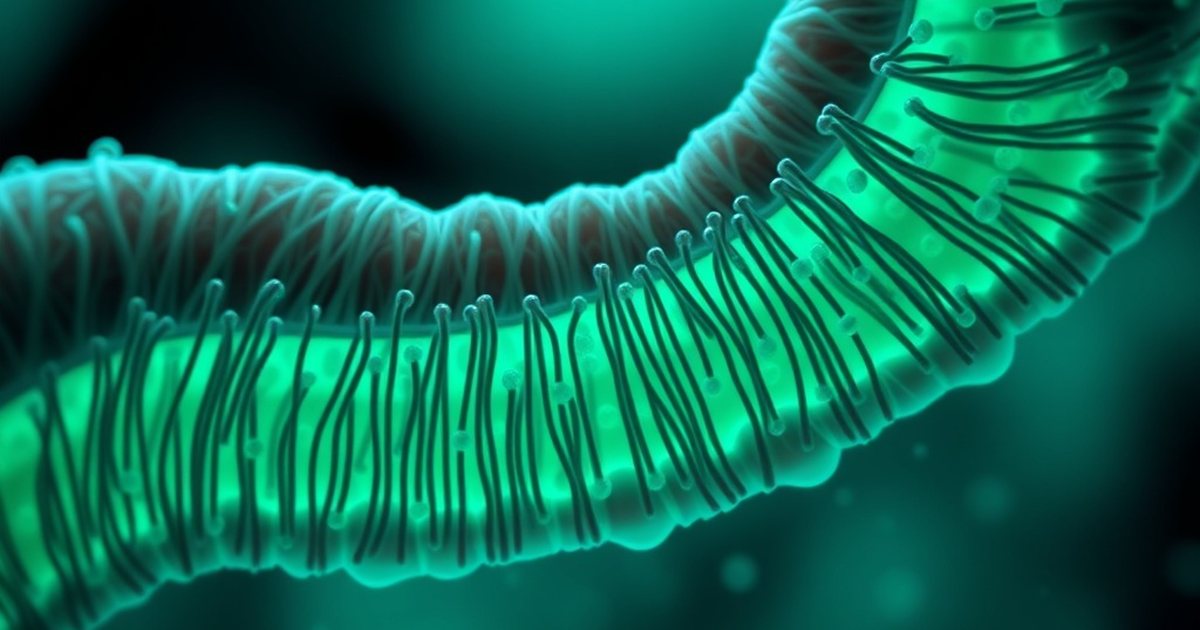
Akkermansia muciniphila lives in the mucus layer of the intestine and makes up more than 1 percent of the gut microbiome in healthy adults. It degrades mucin, the glycoprotein that lines the gut wall, but rather than harming the barrier, this activity appears to stimulate the host to continuously regenerate it — an interaction that may help maintain tight-junction integrity between intestinal cells.
Animal work had already hinted at metabolic benefits. A 2017 mouse study demonstrated that feeding obese and diabetic mice either a purified outer-membrane protein from Akkermansia called Amuc_1100, or a heat-treated (pasteurized) version of the whole bacterium, improved glucose tolerance and reduced fat-mass gain compared with controls [2]. That study also showed that the pasteurized form retained much of the benefit of the live bacterium — an observation that would directly shape the design of the human trial that followed.
Study Design: Who Was Enrolled and How
The Depommier 2019 trial enrolled 40 overweight or obese adults who also met criteria for metabolic syndrome — meaning they had at least some combination of elevated fasting glucose, abnormal blood lipids, high blood pressure, or excess waist circumference [1]. Participants with active gastrointestinal disease or who were taking medications that could confound the results were excluded.
Volunteers were randomized into three groups: a placebo group, a group receiving live Akkermansia muciniphila, and a group receiving pasteurized Akkermansia muciniphila. The supplementation period lasted three months, and neither participants nor assessors knew which group a person had been assigned to for most key endpoints. The primary aim was to establish whether supplementation was safe and well-tolerated — a necessary first step before any larger efficacy trial could be justified [1].
It is important to note the scale. Thirty-two participants split across three arms means roughly ten people per group. This is appropriate for a proof-of-concept pilot, but it means the study was not statistically powered to definitively confirm or rule out effects on most metabolic outcomes. The authors were transparent about this limitation in the original publication [1].
Safety and Tolerability: The Primary Finding
The headline result of the Depommier trial was that supplementation with both live and pasteurized Akkermansia appeared to be safe and well-tolerated over three months in these metabolically compromised volunteers [1]. No serious adverse events were attributed to the supplement, and no meaningful changes in safety blood panels were observed. This was the essential hurdle the study needed to clear, and it did.
The safety finding matters because Akkermansia is a gram-negative bacterium, meaning it carries lipopolysaccharide (LPS) in its outer membrane. LPS is a potent pro-inflammatory molecule, and there was a legitimate theoretical concern that supplementing with a gram-negative organism could worsen systemic inflammation — particularly in people who already have some degree of gut barrier dysfunction. The trial data did not support that concern, at least over a three-month period in this population [1].
Metabolic Outcomes: What Improved and in Which Group
Beyond safety, the researchers measured a range of cardiometabolic markers. Participants who received pasteurized Akkermansia showed improvements in insulin sensitivity and reductions in fasting insulinemia compared with the placebo group [1]. Plasma total cholesterol also declined in the pasteurized group. These are clinically meaningful markers given the population enrolled, though again the sample size means these findings are exploratory rather than confirmatory.
One of the more striking observations was that the pasteurized form appeared to outperform the live form on several metabolic endpoints [1]. This aligns with the earlier mouse data suggesting that heat-stable surface proteins — particularly Amuc_1100 — may be the primary mediators of some metabolic effects, rather than the living bacterium itself [2]. If that mechanism holds in humans, it has practical implications: pasteurized preparations may have better shelf stability and possibly a more consistent dose of the relevant proteins.
Gut permeability markers, including circulating LPS and LPS-binding protein, also showed favorable trends in the supplemented groups relative to placebo [1]. This supports the hypothesis that Akkermansia supplementation may help reinforce intestinal barrier function, though the trial was not designed or sized to prove causation.
The Amuc_1100 Protein: A Proposed Mechanism
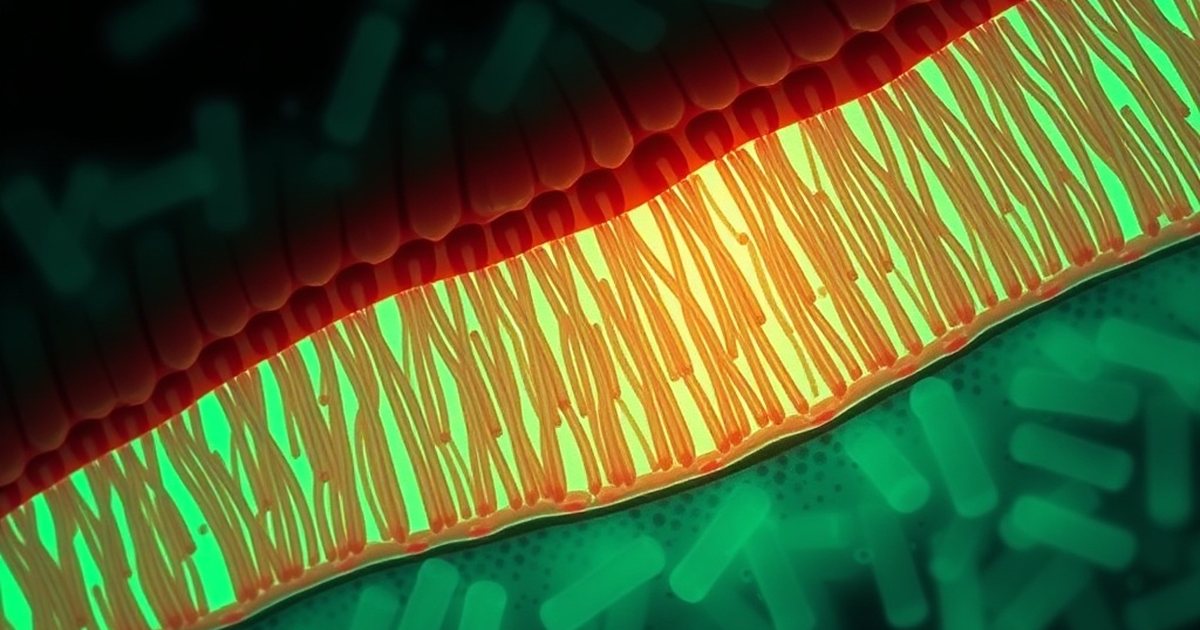
A key thread connecting the 2017 mouse work and the 2019 human trial is the outer-membrane protein Amuc_1100. In mouse models, this protein interacted with Toll-like receptor 2 on intestinal cells, triggering downstream signaling that improved gut barrier function and metabolic parameters even without the presence of live bacteria [2]. Because Amuc_1100 retains its structure after mild heat treatment, pasteurization does not destroy its activity — which is one reason pasteurized Akkermansia performed comparably or better than the live form in some measures.
Whether this same protein-receptor interaction drives the metabolic improvements seen in the 2019 human trial is plausible but not fully established. The human trial was not designed to isolate the contribution of Amuc_1100 specifically; it tested whole preparations, not purified proteins. The mechanistic link from mouse data to human outcomes remains an active area of investigation rather than a settled fact [1].
What This Trial Does Not Tell Us
The Depommier 2019 trial is genuinely important — it established human safety data and provided early signals that metabolic benefits seen in animals might translate to people. But it has clear boundaries. With roughly ten people per arm, most of the metabolic findings are exploratory and require replication in larger, adequately powered trials before they can be treated as confirmed effects [1].
The study enrolled a specific population: overweight or obese adults with metabolic syndrome. The results cannot be straightforwardly generalized to healthy adults with normal metabolic profiles, older populations, people with different disease states, or individuals already taking medications that affect the gut microbiome. The trial also ran for three months; longer-term safety and efficacy data are not available from this study.
The trial also does not tell us what dose is optimal, whether effects persist after stopping supplementation, how Akkermansia interacts with specific dietary patterns, or how supplementation compares with lifestyle interventions that naturally raise Akkermansia abundance, such as increased dietary fiber intake or time-restricted eating.
🛒 Where to Buy Akkermansia muciniphila
- Pendulum AkkermansiaLab-tested / studied
delayed-release capsules, 100M AFU — The only patented live A. muciniphila strain (WB-STR-0001); single-strain with chicory inulin, third-party tested. - Codeage Akkermansia Muciniphila
capsules, 100M AFU, 90 ct — Lower-cost Akkermansia plus chicory inulin synbiotic; 3-month supply, gluten-free. - Double Wood Akkermansia Probiotic + Postbiotic
capsules, per label — Budget Akkermansia option marketed around GLP-1 and postbiotic support.
As an Amazon Associate we earn from qualifying purchases. Akkermansia is a live, oxygen-sensitive strain — choose a delayed-release, third-party-tested product with a stated live AFU count.
A Note on the Evidence
Akkermansia muciniphila supplements are not FDA-approved to treat, cure, or prevent any disease, and the human evidence base currently rests on a single small proof-of-concept trial in a specific metabolic population [1]. Individuals who are immunocompromised, taking immunosuppressive medications, pregnant, or living with active inflammatory bowel disease should consult a qualified healthcare provider before use; this article is informational only and does not constitute medical advice.

Frequently Asked Questions
What was the main purpose of the Depommier 2019 trial?
The study was a proof-of-concept exploratory trial designed primarily to determine whether supplementing with Akkermansia muciniphila was safe and tolerable in overweight adults with metabolic syndrome. Secondary endpoints included metabolic and gut barrier markers. The authors characterized it as hypothesis-generating rather than confirmatory [1].
How many people were in the study?
Forty participants were enrolled and randomized across three groups: placebo, live Akkermansia, and pasteurized Akkermansia, and 32 of them completed the trial. That leaves roughly eleven completers per arm, which is appropriate for a safety pilot but too small to reliably confirm effects on metabolic outcomes [1].
Did pasteurized Akkermansia work better than the live form?
On several metabolic markers, the pasteurized form showed numerically greater improvements than the live form, though the trial was not designed to statistically compare the two active groups against each other [1]. This finding aligns with mouse data suggesting that heat-stable surface proteins like Amuc_1100 may drive much of the metabolic effect [2].
Did the study show that Akkermansia improves gut barrier function?
Participants in the supplemented groups showed favorable trends in circulating markers of gut permeability, including LPS-related measures, compared with placebo [1]. These trends are consistent with the proposed mechanism of Akkermansia supporting intestinal barrier integrity, but the trial was not sized or designed to establish causation definitively.
Is the Depommier trial enough evidence to conclude Akkermansia supplements work?
Not on its own. The 2019 trial was an important first step — it established safety signals and provided early metabolic data in humans — but proof-of-concept trials with small sample sizes are the beginning of an evidence chain, not the end. Larger, adequately powered randomized controlled trials are needed to confirm whether the observed trends represent real, reproducible effects [1].
Who should be cautious about taking Akkermansia supplements?
The 2019 trial excluded people with active gastrointestinal disease. More broadly, Akkermansia is a live or pasteurized bacterial preparation, and live probiotic formulations may carry risk for immunocompromised individuals, those on immunosuppressive therapy, or persons with active inflammatory bowel disease. Anyone in these groups, or anyone with significant health conditions, should consult a physician before starting any probiotic supplement [1].
References
- Depommier C et al. Supplementation with Akkermansia muciniphila in overweight and obese human volunteers: a proof-of-concept exploratory study. Nature medicine (2019). PMID 31263284
- Plovier H et al. A purified membrane protein from Akkermansia muciniphila or the pasteurized bacterium improves metabolism in obese and diabetic mice. Nature medicine (2017). PMID 27892954
These statements have not been evaluated by the Food and Drug Administration. This information is not intended to diagnose, treat, cure, or prevent any disease. Content is for informational purposes only and is not medical advice; consult a qualified healthcare provider before starting any supplement. As an Amazon Associate we earn from qualifying purchases.