You’ve likely encountered the name Akkermansia muciniphila in discussions surrounding longevity, metabolic health, or even as a potential adjunct to GLP-1 receptor agonist therapies. As interest in gut microbiome modulation for health management grows, so too does the desire for clear, actionable guidance on how to incorporate beneficial bacteria like A. muciniphila into your regimen. A primary concern for many is not just whether to take it, but precisely how much, when, and with what considerations for safety and efficacy.
Understanding the optimal dosage and administration of any probiotic requires a careful review of the current scientific evidence. This article, updated for 2026, aims to provide an evidence-based framework for adults aged 35-65 seeking to manage metabolic health, weight, or blood sugar, offering insights into A. muciniphila supplementation grounded in clinical research rather than anecdotal claims.
FTC Disclosure: This article may contain affiliate links to products. We may receive a commission for purchases made through these links, but this does not influence our editorial content. Our recommendations are based on scientific evidence and product quality.
Understanding Akkermansia muciniphila: Mechanism and Rationale for Supplementation
Akkermansia muciniphila is a Gram-negative bacterium naturally residing in the human gut, specifically known for its ability to degrade mucin, the primary component of the intestinal mucus layer. This process is not destructive but rather a critical part of maintaining a healthy gut ecosystem, stimulating the host’s production of new mucin and supporting gut barrier integrity.
Its presence is often inversely correlated with various metabolic disorders, including obesity, type 2 diabetes, and inflammatory bowel diseases. Research suggests A. muciniphila contributes to improved metabolic health through several mechanisms, including enhancing gut barrier function, reducing low-grade inflammation, and influencing host metabolism via the production of short-chain fatty acids (SCFAs) like propionate and acetate, as well as specific proteins like Amuc_1100*.
Current Clinical Dosage Recommendations for Akkermansia muciniphila
The majority of human clinical trials investigating the benefits of oral Akkermansia muciniphila supplementation have utilized a specific dosage range. These studies provide the most robust data for guiding consumer decisions regarding effective intake levels.
Human trials of A. muciniphila have used considerably higher doses than the 1–5 billion CFU counts common on general probiotic labels. The landmark proof-of-concept trial published in Nature Medicine (Depommier et al., 2019) enrolled 40 overweight, insulin-resistant adults — 32 of whom completed — and gave a daily dose of 1 x 10¹⁰ (10 billion) live or pasteurized A. muciniphila cells for three months.[1] The largest trial published to date, a 142-participant multicentre study in adults with metabolic syndrome, used 30 billion pasteurized cells daily for four months.[2] No published human trial has tested a daily dose below 10 billion cells, so the lower counts printed on many labels have no direct trial support at all.
It is important to distinguish between live CFUs and pasteurized (non-viable) cells. While traditional probiotics rely on live bacteria, research has shown that pasteurized A. muciniphila can still exert beneficial effects, suggesting that certain bacterial components, rather than viability alone, are key to its therapeutic actions. Most commercially available supplements currently utilize pasteurized forms, often citing the Depommier study as a basis for their dosage.

Comparison of Dosage Forms and Efficacy
| Dosage Form | Typical Daily Range (CFUs/Cells) | Key Efficacy Considerations | Current Research Status |
|---|---|---|---|
| Live A. muciniphila (Viable) | 1×10¹⁰ (10 billion) in the Depommier live arm; a live strain (AKK-WST01) was also used in a 58-participant type 2 diabetes trial. | In the Depommier trial the live arm did not produce the metabolic improvements seen with the pasteurized arm. Stability and survival through the GI tract remain challenges. | Tested in two randomized human trials; in the type 2 diabetes trial, benefits appeared only in participants who started with low gut Akkermansia.[3] |
| Pasteurized A. muciniphila (Non-viable) | 1×10¹⁰ (10 billion) in the Depommier trial; 30 billion in the largest trial to date. Often expressed as billions of cells. | Improved insulin sensitivity in a proof-of-concept trial; the largest trial to date missed its primary endpoint across its full study population. Better stability and shelf-life than live forms. | Three randomized human trials published to date; results are mixed and appear to depend on baseline gut Akkermansia levels.[2][4] |
| Postbiotics/Fermentates | Variable, dependent on specific active compounds. | Focus on specific beneficial metabolites or bacterial components; may not contain whole cells. | Emerging area; less direct evidence for whole A. muciniphila effects. |
Based on the available evidence, 1 x 10¹⁰ (10 billion) pasteurized A. muciniphila cells per day is the best-supported dose, because that is the amount that produced the insulin-sensitivity improvement in the Depommier trial.[1] A product supplying fewer than 10 billion cells is below every dose any published human trial has tested. Going higher is not clearly better either: the 142-participant trial used 30 billion cells daily and did not meet its primary endpoint across its full study population, with improvements appearing mainly in participants who started with low gut Akkermansia.[2]
When to Take Akkermansia muciniphila: Timing and Administration
Unlike some probiotics that require specific timing relative to meals for optimal survival of live cultures, the timing for pasteurized A. muciniphila is less critical. Since the bacteria are not viable, concerns about stomach acid degradation are mitigated.
Most clinical trials have administered A. muciniphila once daily, typically with a meal or at a consistent time each day. Taking it with a meal may help integrate it into the digestive process, though this is primarily for user convenience and adherence.
Consistency is paramount. Regular daily intake ensures a steady exposure to the beneficial bacterial components, allowing for sustained modulation of gut health and metabolic pathways. Establishing a routine, such as taking it with breakfast or dinner, can aid in adherence.
Safety Profile and Potential Side Effects
Akkermansia muciniphila has a good safety record in the human trials published so far. It is a natural inhabitant of the human gut; the Depommier trial reported that daily supplementation was safe and well tolerated over three months,[1] and the 90-participant weight-maintenance trial reported no serious adverse events related to the treatment.[4] That is a reassuring record, but it rests on a few hundred participants studied for months rather than years.
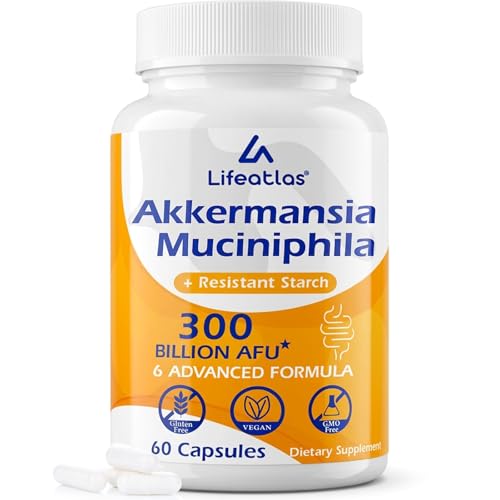
In the published trials, side effects were mild and infrequent and comparable to placebo groups; none of these trials singled out a characteristic side-effect pattern for A. muciniphila. Minor gastrointestinal complaints such as bloating or gas are commonly reported when starting probiotic supplements generally, and often settle as the gut adjusts, but that is a general observation about probiotics rather than a finding from the A. muciniphila trials specifically.
It is crucial to note that current research primarily focuses on pasteurized A. muciniphila. While generally safe, individuals with compromised immune systems, short bowel syndrome, or other severe gastrointestinal conditions should consult their healthcare provider before initiating any new supplement, including A. muciniphila.
Long-Term Use and Synergistic Approaches
The long-term effects of continuous A. muciniphila supplementation are still under investigation. Published trials have run from 12 weeks to roughly eight months: three months in Depommier,[1] 12 weeks in the type 2 diabetes trial,[3] four months in the 142-participant metabolic syndrome trial,[2] and an eight-week weight-loss phase followed by 24 weeks of maintenance in the 90-participant weight-maintenance trial.[4] Nothing longer than that has been published, so claims about multi-year use are extrapolation rather than evidence.
For optimal benefits, A. muciniphila supplementation should be viewed as part of a comprehensive lifestyle strategy. This includes a balanced diet rich in fiber and prebiotics, regular physical activity, and adequate sleep. These lifestyle factors are known to independently support a diverse and healthy gut microbiome, which can synergistically enhance the effects of A. muciniphila.

Specific dietary fibers, such as fructans and galactooligosaccharides, serve as prebiotics that can nourish beneficial gut bacteria, including those that may indirectly support A. muciniphila. While A. muciniphila itself consumes mucin, a diverse gut environment created by prebiotic consumption can foster overall gut health.
What to Look For When Buying Akkermansia muciniphila Supplements
When searching for an Akkermansia muciniphila supplement, consider the following key attributes to ensure you are selecting a high-quality, evidence-aligned product:
Firstly, prioritize products that clearly state the dosage in billions of cells, typically ranging from 1 billion to 10 billion pasteurized cells per serving. This aligns with the quantities used in successful human clinical trials. Look for terms like “pasteurized Akkermansia muciniphila” or “heat-inactivated Akkermansia muciniphila,” as this is the form with the most robust human data.

Secondly, verify that the product is third-party tested for purity and potency. Independent verification ensures that the supplement contains the stated amount of A. muciniphila and is free from contaminants. Certifications from organizations like NSF International or USP are good indicators of quality control.
Lastly, consider the presence of additional ingredients. Some supplements may combine A. muciniphila with prebiotics or other beneficial strains. While these combinations may offer synergistic benefits, ensure the primary A. muciniphila dosage is adequate and that any additional ingredients are clearly listed and understood. You can find options by searching for Akkermansia muciniphila supplement, gut barrier probiotic, or metabolic probiotic on major retailers.
Conclusion
Akkermansia muciniphila represents a promising avenue for improving metabolic health, supporting gut barrier function, and potentially complementing strategies for weight and blood sugar management. The current evidence, primarily from studies using pasteurized forms, points to 1 x 10¹⁰ (10 billion) cells per day as the best-supported dose — and to a body of evidence that is still small, mixed, and dependent on where your own gut Akkermansia levels start.
While the science continues to evolve, incorporating A. muciniphila into your daily routine, alongside a healthy lifestyle, offers an evidence-based approach to supporting your metabolic well-being. Always consult with a healthcare professional before starting any new supplement, especially if you have underlying health conditions or are taking other medications.
Frequently Asked Questions (FAQ)
What is the recommended daily dosage of Akkermansia muciniphila?
The best-supported daily dose is 10 billion (1×10¹⁰) pasteurized cells — the amount used in the Depommier 2019 proof-of-concept trial, which is the trial that showed improved insulin sensitivity. A larger 142-participant trial used 30 billion cells daily but did not meet its primary endpoint across its full study population. No published human trial has tested a daily dose below 10 billion cells.
When is the best time to take Akkermansia muciniphila?
Since most commercial supplements use pasteurized A. muciniphila, timing is less critical than for live probiotics. Taking it once daily, consistently, often with a meal, is a common and effective approach.
Is Akkermansia muciniphila safe to take long-term?
Human clinical trials have reported a good safety profile with mild and infrequent side effects. That record covers trials lasting from 12 weeks to roughly eight months in a few hundred participants in total; use beyond that has not been studied, so sustained multi-year use is extrapolation rather than an evidence-backed claim.

Can Akkermansia muciniphila help with weight loss or blood sugar management?
Partly, and with important caveats. In the Depommier 2019 trial, pasteurized A. muciniphila significantly improved insulin sensitivity, but its effects on body weight and fat mass did not reach statistical significance. A later 90-participant trial found less weight regain after a low-energy diet, and a 58-participant type 2 diabetes trial found body-weight and HbA1c benefits only in participants who started with low gut Akkermansia levels. It is not a weight-loss drug and should be used as part of a comprehensive healthy lifestyle.
What is the difference between live and pasteurized Akkermansia muciniphila?
Live A. muciniphila contains viable bacteria, while pasteurized (heat-inactivated) forms do not. Most human clinical trials and commercially available supplements use the pasteurized form, which has demonstrated efficacy due to the beneficial components of the bacterial cell rather than its viability.
Should I take Akkermansia muciniphila if I am on a GLP-1 receptor agonist medication?
If you are taking GLP-1 receptor agonists or any other prescription medication, it is essential to consult your healthcare provider before introducing any new supplements, including A. muciniphila, to ensure there are no contraindications or interactions.
These statements have not been evaluated by the FDA. This product is not intended to diagnose, treat, cure, or prevent any disease.
References
- Depommier C et al. Supplementation with Akkermansia muciniphila in overweight and obese human volunteers: a proof-of-concept exploratory study. Nature Medicine (2019). PMID 31263284
- Suenaert P et al. Effect of pasteurized Akkermansia muciniphila MucT on insulin sensitivity, body composition, and GLP-1 production in subjects with metabolic syndrome: impact of low baseline gut Akkermansia levels. Gut Microbes (2026). PMID 42343233
- Zhang L et al. Akkermansia muciniphila supplementation in patients with overweight/obese type 2 diabetes: Efficacy depends on its baseline levels in the gut. Cell Metabolism (2025). PMID 39879980
- Mount S et al. Pasteurized Akkermansia muciniphila MucT for weight loss maintenance in people with overweight and obesity: a controlled randomized trial. Nature Medicine (2026). PMID 42120725
These statements have not been evaluated by the Food and Drug Administration. This information is not intended to diagnose, treat, cure, or prevent any disease. Content is for informational purposes only and is not medical advice; consult a qualified healthcare provider before starting any supplement. As an Amazon Associate we earn from qualifying purchases.