GLP-1 — glucagon-like peptide-1 — has become one of the most discussed molecules in metabolic health, largely because pharmaceutical versions of it (semaglutide, tirzepatide) have shown striking effects on weight and blood sugar. What is less widely known is that the gut produces GLP-1 naturally, and that the bacteria living in your colon may influence how much of it gets released. Akkermansia muciniphila, a gut bacterium associated with intestinal barrier health, has emerged as a candidate for modulating this pathway through several distinct biological mechanisms.
This article examines what the current research actually says about Akkermansia and GLP-1 secretion, explains the proposed mechanisms in plain language, and places the evidence in honest perspective. Most of this research is preclinical or early-stage human data. Akkermansia supplements are not FDA-approved to treat, cure, or prevent any disease, and this article is informational only — not medical advice.
Key Takeaways
- Akkermansia muciniphila produces proteins that have been shown to stimulate GLP-1 secretion in mice and cell models, pointing to a direct bacterium-to-L-cell signaling mechanism [1][2].
- A second, indirect pathway involves SCFA production: Akkermansia influences the gut’s SCFA profile, which can trigger GLP-1 release from intestinal L-cells [3].
- Tryptophan metabolite regulation may represent a third pathway linking higher Akkermansia abundance to GLP-1 output [4].
- Early human trial data suggest pasteurized Akkermansia may improve GLP-1 production and insulin sensitivity in people with metabolic syndrome, especially those with low baseline Akkermansia levels [5].
- Most evidence is still preclinical; the effect is not equivalent to and cannot be compared with GLP-1 receptor agonist drugs, and large confirmatory human trials are needed.
What Is GLP-1 and Why Is It Called the 'Ozempic Hormone'?
GLP-1 is an incretin hormone secreted mainly by L-cells concentrated in the small intestine and colon. After a meal, it signals the pancreas to release insulin, tells the brain to reduce appetite, and slows gastric emptying — a combination that helps regulate both blood sugar and body weight. Semaglutide (Ozempic, Wegovy) and tirzepatide work by mimicking or prolonging the action of GLP-1, which is why the peptide has picked up the popular shorthand ‘the Ozempic hormone.’
The body’s own L-cells produce GLP-1 continuously, but output varies. Diet, fiber intake, and gut microbiota composition all appear to influence how much the intestine secretes. This has prompted researchers to ask whether specific bacteria — particularly Akkermansia muciniphila — can meaningfully nudge L-cell output, and if so, through what mechanisms.
Akkermansia muciniphila: A Brief Profile
Akkermansia muciniphila is a gram-negative anaerobic bacterium that colonizes the mucus layer lining the intestine. In healthy adults, it typically makes up more than 1% of gut microbiota. It has attracted scientific interest because it degrades mucin — the protein backbone of intestinal mucus — while simultaneously appearing to stimulate the host to produce more mucus and strengthen the tight junctions between epithelial cells, reinforcing the gut barrier.
Epidemiologically, lower Akkermansia abundance has been associated with obesity, type 2 diabetes, and metabolic syndrome. Whether that relationship is causative or correlative remains under active investigation. The bacterium has been studied in both live and pasteurized (heat-killed) forms, and evidence to date suggests the pasteurized version may be as effective as the live form for some metabolic outcomes — an important practical point for supplement formulation.
The Protein-Based Mechanism: A Direct Line to L-Cells
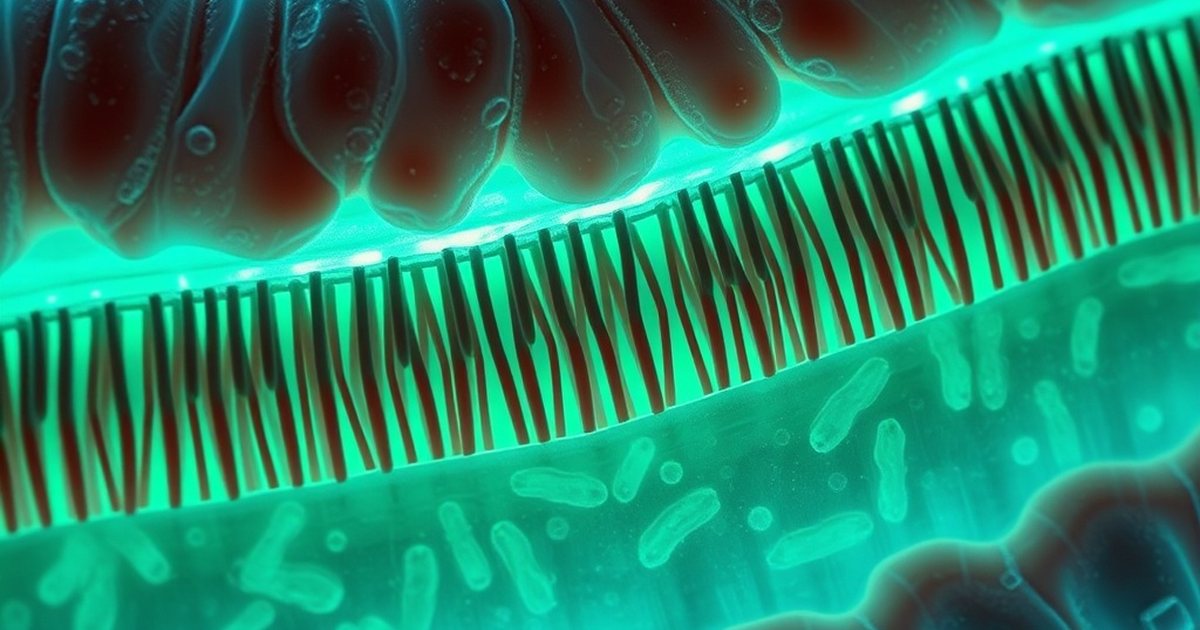
Two landmark papers published in 2021 identified specific Akkermansia-derived proteins that appear to stimulate GLP-1 release. A study in Cell Metabolism reported the identification of a newly characterized protein secreted by Akkermansia that directly stimulated GLP-1 secretion in cell and animal models [2]. A paper in Nature Microbiology described a related Akkermansia-secreted protein that induced GLP-1 production and improved glucose homeostasis and metabolic disease markers in mice [1].
These findings are significant because they propose a direct molecular conversation between the bacterium and the host’s hormone-secreting cells, rather than a purely indirect effect mediated through fermentation or gut barrier changes. This protein-based pathway is distinct from the better-known Amuc_1100 outer-membrane protein, which has been more extensively studied for its role in improving intestinal barrier function. Together, these proteins point to a growing list of Akkermansia-derived components with metabolic signaling potential.
Both studies were conducted primarily in mice and cell-culture systems. Whether the same proteins exert the same effects in humans — and at what concentrations they need to be present to do so — requires additional clinical investigation before firm conclusions can be drawn.
The SCFA Pathway: A Second Route to GLP-1
Short-chain fatty acids (SCFAs) — acetate, propionate, and butyrate — are produced when gut bacteria ferment dietary fiber. SCFAs are established stimulants of L-cell GLP-1 secretion, acting via G-protein-coupled receptors (GPR41, GPR43) expressed on those cells. Akkermansia muciniphila, both on its own and through its interactions with other members of the microbiota, influences the overall SCFA landscape in the colon.
A 2026 animal study using a pasteurized Akkermansia preparation found evidence that its effects on obesity were mediated, at least partly, through a gut microbiota–SCFA–GLP-1 axis, alongside activation of the AMPK/PPAR-alpha energy-sensing pathway [3]. This suggests that Akkermansia’s influence on GLP-1 may involve both direct protein-based signaling at L-cells and indirect SCFA-mediated stimulation, making the overall picture more complex than a single mechanism.
A 2025 review in Nutrients synthesized available evidence on Akkermansia’s effects on GLP-1 and insulin secretion, noting that multiple complementary pathways — including SCFA production, gut barrier reinforcement, and direct bacterial protein signaling — likely contribute to the metabolic effects observed in research to date [6].
Tryptophan Metabolism: An Additional Node
A 2026 study examining honokiol (a plant compound) found that its anti-diabetic effects in mice were associated with enrichment of Akkermansia muciniphila in the gut alongside changes in tryptophan metabolism [4]. Tryptophan metabolites — particularly indoles produced by gut bacteria — are known activators of intestinal L-cells and can stimulate GLP-1 secretion. This adds another potential node in the network through which higher Akkermansia abundance might relate to GLP-1 output.
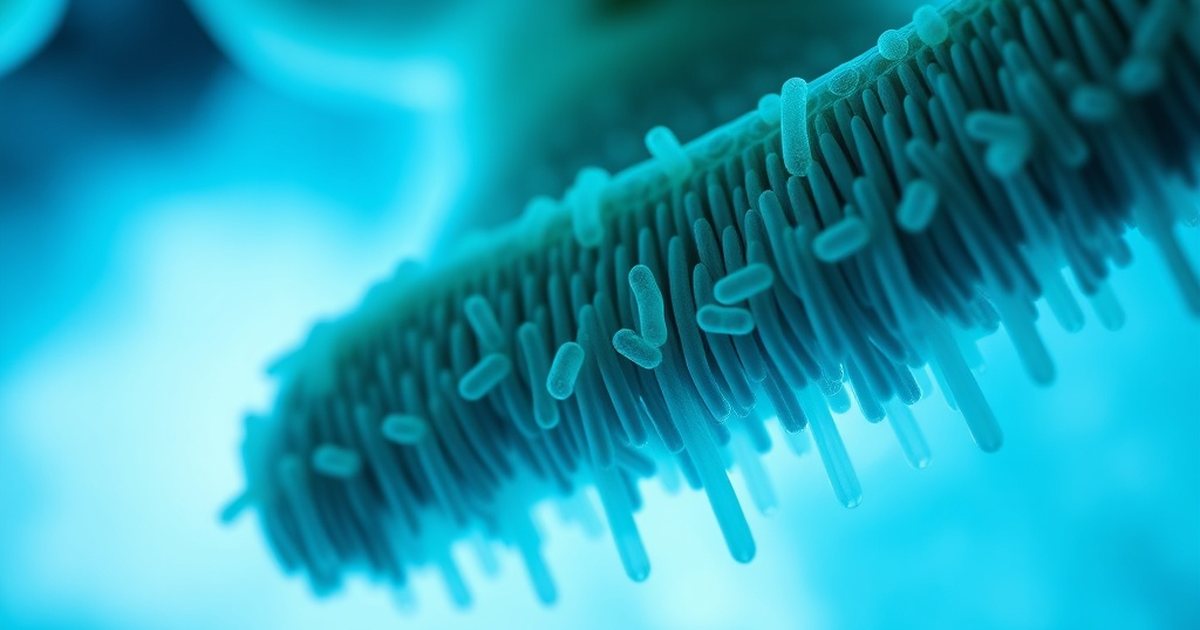
The tryptophan-indole pathway is an active area of research in gut-metabolic axis biology. Its apparent involvement suggests that Akkermansia’s effects on metabolism are unlikely to be a simple two-step process and may be part of a broader remodeling of gut microbial signaling — though the causal relationships in humans remain to be established.
Human Trial Evidence: Encouraging but Early
The most direct human evidence published to date comes from a 2026 randomized trial in Gut Microbes. Subjects with metabolic syndrome received pasteurized Akkermansia muciniphila (the MucT strain). Researchers observed improvements in insulin sensitivity, body composition, and GLP-1 production. Importantly, participants with low baseline Akkermansia abundance in their gut appeared to show a stronger response, suggesting that those most depleted of the bacterium may have the most room for improvement [5].
This is a single trial with a specific pasteurized formulation, and the broader field still lacks large, long-term, double-blind, placebo-controlled studies powered to detect meaningful clinical endpoints in general populations. The evidence is encouraging — it shows that GLP-1 changes in humans are at least plausible — but it does not support claims that Akkermansia supplements produce effects comparable in magnitude to GLP-1 receptor agonist drugs. Those drugs deliver pharmacological doses of a GLP-1 mimetic that produce large, sustained hormonal effects; a probiotic that modestly shifts the gut environment is a very different intervention.
🛒 Where to Buy Akkermansia muciniphila
- Pendulum AkkermansiaLab-tested / studied
delayed-release capsules, 100M AFU — The only patented live A. muciniphila strain (WB-STR-0001); single-strain with chicory inulin, third-party tested. - Codeage Akkermansia Muciniphila
capsules, 100M AFU, 90 ct — Lower-cost Akkermansia plus chicory inulin synbiotic; 3-month supply, gluten-free. - Double Wood Akkermansia Probiotic + Postbiotic
capsules, per label — Budget Akkermansia option marketed around GLP-1 and postbiotic support.
As an Amazon Associate we earn from qualifying purchases. Akkermansia is a live, oxygen-sensitive strain — choose a delayed-release, third-party-tested product with a stated live AFU count.
A Note on the Evidence
The evidence linking Akkermansia muciniphila to GLP-1 secretion is real but remains largely preclinical; the sole human trial cited here is small and studied a specific pasteurized strain in a metabolic syndrome population, so the findings should not be generalized broadly or taken as proof of equivalence with prescription GLP-1 therapies. Individuals who are immunocompromised, on immunosuppressive medications, or who have active inflammatory bowel disease should consult a physician before using any Akkermansia supplement.
Frequently Asked Questions
Does Akkermansia muciniphila actually increase GLP-1 in humans?
One 2026 randomized trial in subjects with metabolic syndrome found that pasteurized Akkermansia supplementation was associated with improved GLP-1 production, alongside improvements in insulin sensitivity and body composition [5]. This is promising, but it represents early-stage human evidence from a single trial, and larger studies are needed before broad conclusions can be drawn.

What proteins from Akkermansia are thought to stimulate GLP-1?
Two studies published in 2021 identified Akkermansia-secreted proteins capable of stimulating GLP-1 secretion in cell and animal models [2][1]. These are distinct from the well-studied Amuc_1100 outer-membrane protein and suggest the bacterium carries multiple components with potential to signal to intestinal hormone-secreting cells.
Is taking Akkermansia the same as taking Ozempic?
No — they are biologically different interventions with different magnitudes of effect. GLP-1 receptor agonist drugs deliver pharmacological doses of a long-acting GLP-1 mimetic, producing large and sustained increases in GLP-1 pathway activity. Akkermansia may modestly influence the gut’s own natural GLP-1 output through microbial signaling pathways, but the two should not be compared as equivalent.
Does the live or pasteurized form work better for GLP-1?
The human trial evidence published so far has used a pasteurized (heat-killed) formulation and found improvements in GLP-1 and metabolic markers [5]. Animal research has also reported SCFA-GLP-1 axis effects with a pasteurized preparation [3]. Whether live Akkermansia produces equivalent or superior GLP-1 effects in humans has not yet been directly compared in clinical trials.
Who might benefit most from Akkermansia for GLP-1 effects?
Based on current data, people with metabolic syndrome and particularly low baseline Akkermansia gut abundance appeared to show the strongest improvements in GLP-1 production and insulin sensitivity in the available human trial [5]. Those most depleted of the bacterium may have the most room to benefit, though this finding needs replication in larger populations.
Are Akkermansia supplements safe for everyone?
Live probiotic formulations carry potential risk for immunocompromised individuals, those on immunosuppressive therapy, or persons with active inflammatory bowel disease. Even pasteurized formulations have not been studied across all populations or health conditions. Anyone with a significant health condition should consult a physician before starting any Akkermansia supplement. These products are not FDA-approved to treat, cure, or prevent any disease.
References
- Yoon HS et al. Akkermansia muciniphila secretes a glucagon-like peptide-1-inducing protein that improves glucose homeostasis and ameliorates metabolic disease in mice. Nature microbiology (2021). PMID 33820962
- Cani PD et al. A newly identified protein from Akkermansia muciniphila stimulates GLP-1 secretion. Cell metabolism (2021). PMID 34077715
- Yang L et al. Pasteurized Akkermansia muciniphila AKK PROBIO Attenuates Obesity Through Gut Microbiota-SCFA-GLP-1 Axis and Potential Involvement of AMPK/PPAR-α Pathway. Probiotics and antimicrobial proteins (2026). PMID 41123834
- Lin Y et al. Honokiol attenuates diabetes by enriching Akkermansia muciniphila andregulating tryptophan metabolism in mice. Chinese journal of natural medicines (2026). PMID 41571367
- Suenaert P et al. Effect of pasteurized Akkermansia muciniphila MucT on insulin sensitivity, body composition, and GLP-1 production in subjects with metabolic syndrome: impact of low baseline gut Akkermansia levels. Gut microbes (2026). PMID 42343233
- Arukha AP et al. Effect of Akkermansia muciniphila on GLP-1 and Insulin Secretion. Nutrients (2025). PMID 40806100
These statements have not been evaluated by the Food and Drug Administration. This information is not intended to diagnose, treat, cure, or prevent any disease. Content is for informational purposes only and is not medical advice; consult a qualified healthcare provider before starting any supplement. As an Amazon Associate we earn from qualifying purchases.