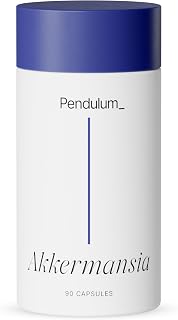
For most healthy adults, Akkermansia muciniphila supplements appear to be well-tolerated based on early human trials and widespread user reports. That said, the research is still young, meaningful gaps exist around long-term use and vulnerable populations, and a real subset of people do report digestive discomfort, particularly in the early weeks.
What the research says
Human clinical data on Akkermansia muciniphila as a supplement is promising but limited. The most cited human study is Depommier and colleagues’ 2019 pilot trial in Nature Medicine, which randomised 40 overweight or obese insulin-resistant adults (32 completed) to placebo, live, or pasteurized A. muciniphila at 1010 cells daily. Both bacterial arms were safe and well tolerated across three months, with no adverse events recorded and compliance above 99%[1]. (A frequently repeated version of this attributes the trial to Plovier and colleagues; that 2017 paper is a study in mice, not people.)
Two substantially larger trials have since reported. A 2026 trial followed 90 adults through an 8-week low-energy diet and a 24-week maintenance phase on daily pasteurized A. muciniphila, observing no treatment-related serious adverse events[2]. A 2026 multicentre trial in 142 adults with metabolic syndrome ran four months and, while it missed its primary efficacy endpoint, raised no safety signal[3].
One caveat that applies to all of them: the human safety record for this supplement rests almost entirely on trials run, staffed, or co-founded by the company that sells it. The 2019 authors disclose that they are patent holders and co-founders of the commercial developer, and both 2026 trials list employees, consultants or co-founders of The Akkermansia Company among their authors[1][2][3]. That does not make the results wrong, and all three are registered trials in peer-reviewed journals. It does mean there is no large, fully independent safety dataset to check them against yet.
However, “no serious adverse events in a small, short trial” is not the same as a comprehensive safety record. Here is what the current evidence actually covers:
Common reported side effects in trials: Mild gastrointestinal symptoms, including loose stools, increased gas, and temporary bloating, appear most often during the initial adjustment period. These typically settle within one to two weeks.
Dosing safety: Most human research has used pasteurized (heat-killed) A. muciniphila, not live bacteria. Pasteurized forms are considered lower risk because the bacteria cannot replicate in the gut. Live-culture products exist commercially but have less human safety data behind them. No upper safe limit has been established in humans. The nearest thing is a regulatory toxicology package in which rats given pasteurized A. muciniphila daily for 90 days showed no adverse effects at the highest dose tested, setting a no-observed-adverse-effect level of 9.6 × 10¹⁰ cells per kg of body weight per day, alongside negative genotoxicity assays[4]. That is an animal safety margin supporting use as a food ingredient, not a human dosing ceiling, and it should not be read as one.
Pregnancy and breastfeeding: There is essentially no safety data for pregnant or breastfeeding individuals. Standard precautionary guidance applies: avoid unless a clinician specifically advises otherwise.
Immunocompromised individuals: People on immunosuppressive therapy, those who have undergone organ transplants, or anyone with a significantly compromised immune system should consult a physician before using any probiotic, including A. muciniphila. In theory, introducing bacteria into a suppressed immune environment carries risks that do not apply to healthy adults.
Drug interactions: No well-documented drug interactions have been established. That said, A. muciniphila influences gut barrier function, bile acid metabolism, and inflammation pathways, all of which can theoretically interact with medications that depend on gut absorption or microbiome activity. If you take immunosuppressants, anticoagulants, or medications with a narrow therapeutic window, speak to your pharmacist or prescriber first.
Quality and contamination concerns: The supplement market is not uniformly regulated. Because A. muciniphila is an anaerobic organism, it is sensitive to oxygen during manufacturing. Products that are poorly handled may contain far fewer viable organisms than advertised, or in the case of live products, potentially inconsistent bacterial loads. Choosing brands with third-party testing and transparent manufacturing practices matters more here than with many other supplements.

What real users report
The Reddit discussions available across communities like r/Longcovidgutdysbiosis, r/Microbiome, r/SIBO, and r/GutHealth reveal several consistent themes. It is worth noting that most people discussing A. muciniphila online are doing so in the context of significant gut dysbiosis, which means their experiences may not reflect what a generally healthy person would encounter.
Theme 1: Akkermansia depletion is a common finding, and supplementation is often part of a broader protocol
Across multiple communities, users share GI-MAP or metagenomic test results showing extremely low or undetectable A. muciniphila alongside other depleted beneficial bacteria. People in r/SIBO and r/Microbiome frequently describe plans to supplement A. muciniphila alongside bifidobacteria and butyrate producers as part of a multi-pronged approach to dysbiosis. Very few are using it in isolation, which makes attributing specific effects, good or bad, genuinely difficult.
Theme 2: Some users report meaningful improvements, particularly in gut barrier symptoms
In r/Longcovidgutdysbiosis, one highly upvoted post describes a user who reported resolution of severe histamine intolerance symptoms after working to restore a depleted microbiome that included low A. muciniphila. While this person cannot isolate which intervention helped, the improvement in gut-related symptoms after addressing dysbiosis was striking to others in the community. Similar anecdotes appear across gut health forums, with users describing reduced bloating and improved food tolerance over time.
Theme 3: Digestive discomfort in the early period is a recurring complaint
This is an important theme to acknowledge honestly. A number of users, particularly those already dealing with SIBO or severe dysbiosis, describe a rough adjustment period when introducing gut-altering supplements including A. muciniphila. Increased bloating, gas, and altered stool patterns are mentioned repeatedly. In r/SIBO specifically, where users already deal with significant fermentation issues, adding any new probiotic or prebiotic is approached cautiously because of the risk of worsening symptoms temporarily. Several users note that starting at low doses and increasing slowly seemed to reduce this effect.
Theme 4: Skepticism about testing accuracy creates uncertainty about whether supplementation is even needed
One candid post in r/Longcovidgutdysbiosis raises a point that adds important nuance: the user questions whether consumer microbiome tests consistently and accurately identify low A. muciniphila, noting that results can vary substantially between testing platforms. This skepticism is legitimate. Clinical researchers have raised similar concerns about consumer microbiome test reliability. Several Reddit users describe spending money on supplements based on test results that may not have been accurate in the first place.
Theme 5: People using it for complex or poorly understood conditions report mixed results
Users in communities focused on long COVID, PSSD (post-SSRI sexual dysfunction), and chronic gut issues are exploring A. muciniphila out of desperation after conventional medicine has not helped. Their results are genuinely mixed. Some report partial improvement in systemic symptoms. Others see no change. A few describe worsening digestive symptoms that led them to stop. These communities are candid that they are experimenting, often without clinical oversight, in areas where the science is far from settled.

Who should be cautious
- Pregnant or breastfeeding individuals, no safety data exists for these groups.
- People with compromised immune systems, including those on immunosuppressants, chemotherapy, or with HIV/AIDS.
- People with active SIBO, any probiotic or fermentable supplement can temporarily worsen symptoms; introduce very slowly and ideally with clinical guidance.
- People with severe intestinal permeability or active gut inflammation, while A. muciniphila is theorized to support gut barrier function, introducing bacteria to an already inflamed gut carries unpredictable risks.
- Anyone on medications with a narrow therapeutic index, changes in gut microbiome composition can subtly influence drug absorption and metabolism.
- Children, no pediatric safety data is available.
- Anyone buying from unvetted supplement brands, quality control in this category is inconsistent; contaminated or mislabeled products are a real concern.
FAQ
Q: Can Akkermansia muciniphila cause side effects?
A: Yes, particularly in the first one to two weeks. The most commonly reported effects are increased gas, bloating, and loose stools. These often resolve on their own. People with existing gut conditions like SIBO may experience a more pronounced adjustment period.
Q: Is it safe to take Akkermansia long-term?
A: Honest answer: still largely unknown, though the window has widened. Early trials ran three months; the longest to date followed participants through a 24-week maintenance phase on daily supplementation without treatment-related serious adverse events[2]. That is roughly half a year, not years. There are no obvious red flags from existing data, but genuinely long-term safety in humans has not been established. This is a reason to use it purposefully rather than indefinitely without reassessment.
Q: Is live or pasteurized Akkermansia safer?
A: Pasteurized (heat-killed) A. muciniphila has more human clinical safety data behind it than live-culture versions. The pasteurized form cannot replicate in the gut, which most researchers consider a safety advantage, particularly for anyone who is not in optimal health.
Q: Should I talk to a doctor before taking Akkermansia?
A: Yes, particularly if you have any ongoing health condition, take prescription medications, or are pregnant. This article is informational only and does not replace personalized medical advice. A clinician familiar with your health history is the right person to help you decide whether this supplement makes sense for you.
The user-experience section reflects themes synthesized from public discussions on Reddit communities (r/Longcovidgutdysbiosis, r/SIBO, r/PSSD). Individual experiences vary and are not medical advice. Consult a healthcare professional before starting or stopping any supplement.
References
- Depommier C et al. Supplementation with Akkermansia muciniphila in overweight and obese human volunteers: a proof-of-concept exploratory study. Nature Medicine (2019). PMID 31263284
- Mount S, Canfora EE et al. Pasteurized Akkermansia muciniphila Muc(T) for weight loss maintenance in people with overweight and obesity: a controlled randomized trial. Nature Medicine (2026). PMID 42120725
- Suenaert P et al. Effect of pasteurized Akkermansia muciniphila MucT on insulin sensitivity, body composition, and GLP-1 production in subjects with metabolic syndrome. Gut Microbes (2026). PMID 42343233
- Druart C et al. Toxicological safety evaluation of pasteurized Akkermansia muciniphila. Journal of Applied Toxicology (2021). PMID 32725676
These statements have not been evaluated by the Food and Drug Administration. This information is not intended to diagnose, treat, cure, or prevent any disease. Content is for informational purposes only and is not medical advice; consult a qualified healthcare provider before starting any supplement. As an Amazon Associate we earn from qualifying purchases.