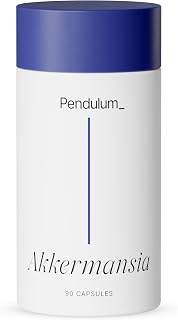
Pendulum Therapeutics markets one of the few commercially available Akkermansia muciniphila supplements aimed at consumers interested in gut barrier health and metabolic support. As interest in the microbiome has grown, so has the price tag attached to live-culture probiotic products: making discount codes and subscription tiers a practical concern for anyone evaluating whether the product fits their budget.
This article explains what Pendulum Akkermansia actually is, what the current pricing structure looks like, where legitimate discount codes tend to surface, and what honest caveats apply before spending money on a supplement in this category. Akkermansia muciniphila supplements are not FDA-approved to treat, cure, or prevent any disease, and nothing here constitutes medical advice.
Key Takeaways
- Pendulum Akkermansia’s one-time monthly retail price is listed on the official product page and moves with promotions; subscriptions usually reduce it by 15 to 20%.
- The most reliable discount routes are the Pendulum email newsletter welcome offer and verified podcast affiliate codes: coupon aggregator sites frequently list expired codes.
- Akkermansia muciniphila research is promising but early; no supplement in this category is FDA-approved to treat or cure any condition.
- Live probiotic formulations carry elevated risk for immunocompromised individuals: consult a doctor before use if this applies to you.
- Subscription auto-ship makes financial sense only if you plan consistent use for multiple months; single-trial purchases are lower-commitment.
What Is Pendulum Akkermansia?
Pendulum Akkermansia is a single-strain probiotic supplement containing live Akkermansia muciniphila, a gram-negative bacterium that naturally colonizes the mucus layer of the human gut[1]. In human gut metagenomes its share varied from under 0.01% to nearly 4% of assembled reads in one study of 37 samples [4]. It is one of the more extensively studied next-generation probiotic candidates, distinguished from classical Lactobacillus or Bifidobacterium products by its specific niche in the gut lining.
Pendulum positions the product around proposed mechanisms including support for intestinal barrier integrity, tight-junction upregulation, and signaling through the Amuc_1100 outer-membrane protein[2]. Emerging human trial data has examined relationships between Akkermansia abundance and markers such as GLP-1 secretion, insulin sensitivity, and fasting glucose, though the evidence base remains early and studies vary in size, duration, and population. The company holds patents on its Akkermansia strain and the manufacturing process required to keep anaerobic live cultures viable through production and shelf storage.
A key differentiator Pendulum emphasizes is that its product contains live bacteria, not pasteurized cells. Maintaining viable anaerobic cultures requires specialized encapsulation and cold-chain logistics, which contributes substantially to the cost compared with shelf-stable probiotics.
Live is not shown to be better. In the one human pilot that tested both forms, only the pasteurized arm improved insulin sensitivity, and mouse studies disagree on which form works better. In mice, live Akkermansia given after antibiotics worsened colitis-associated cancer, and a systematic review found live cells could promote tumors in inflammatory or post-antibiotic settings [5][10][11][12][13].

Pendulum Akkermansia Pricing in 2025
As of mid-2025, Pendulum Akkermansia is sold primarily through Pendulum’s own website. A one-time purchase covers a one-month supply (30 capsules). Pricing can shift with promotions, so the most accurate current figure is always the live product page. Third-party retailers carrying the product have historically priced it similarly, though availability outside the official store is limited given the cold-chain requirements.
Research note: A review reports a randomized study of 90 adults found less weight regain after a low-energy diet with pasteurized MucT than with placebo [5].
Pendulum’s subscription model is the most reliable way to reduce the per-month cost. Subscribe-and-save options have historically offered 15 to 20% off the one-time retail price; apply that discount to the currently listed price to estimate your own effective monthly cost. Subscriptions typically ship every 30 days and can be paused or canceled through the customer portal. Bundling Akkermansia with other Pendulum products (such as their Glucose Control formulation) sometimes unlocks additional tier pricing.

Note that Pendulum periodically adjusts its pricing structure, and figures cited here reflect general market information rather than a guaranteed current price. Always verify directly with Pendulum before purchasing.
How to Find Valid Pendulum Akkermansia Discount Codes
Pendulum has historically distributed promotional codes through health and wellness podcast partnerships, influencer collaborations, and newsletter sign-ups. Codes tied to podcast hosts or health coaches vary and cannot be verified here; check terms at checkout and are shared in episode show notes or on the affiliate’s website. Searching ‘[podcast name] Pendulum code’ often surfaces these, though codes expire and terms vary.
The most reliable source of a working code is Pendulum’s own email list. New subscribers frequently receive a first-purchase discount, typically 10 to 20%, delivered automatically after sign-up. If you plan to purchase, signing up for the newsletter before checking out is a low-effort way to capture that offer. Pendulum also runs periodic promotions around calendar events (New Year, Black Friday) where sitewide codes appear directly on the homepage.
Be cautious with third-party coupon aggregator sites. Many list Pendulum codes that are expired, affiliate-only, or simply fabricated to drive traffic. If a code fails at checkout, assume it is no longer valid rather than expecting the site to honor it. Pendulum’s customer support can sometimes confirm whether a specific code is active.
Is a Subscription Worth It?
Whether a subscription makes financial sense depends on two questions: whether you intend to take the product consistently for at least two to three months, and whether the ongoing cost fits your budget. No verified fact shows how long changes last after stopping; in the 2019 pilot the overall gut microbiome structure was unaffected by three months of supplementation [3]. If you are evaluating Akkermansia supplementation purely on a trial basis, a single one-time purchase makes more sense than committing to auto-ship.
For those already sold on the rationale and expecting longer-term use, the 15 to 20% subscription discount represents meaningful savings over a year: at 15 to 20% off twelve monthly orders, the equivalent of roughly two months of product. Pendulum has generally made it straightforward to pause or cancel subscriptions online without requiring a phone call, which reduces the risk of being locked into unwanted charges.
Stacking a first-order email discount on top of subscribing is possible if Pendulum’s system permits applying both. The checkout flow will indicate whether the discount applies to subscription orders or only to one-time purchases.
The Science Context: What Akkermansia Research Actually Shows
Akkermansia muciniphila has attracted substantial scientific attention as a microbiome biomarker and potential therapeutic target. Animal studies and some human observational data have linked lower Akkermansia abundance to metabolic dysfunction, obesity, and increased intestinal permeability. Proposed mechanisms center on mucin degradation and cross-feeding, Amuc_1100 protein interaction with gut epithelial receptors, and downstream effects on GLP-1 secretion and inflammatory signaling.
Human intervention trials with Akkermansia supplementation are still relatively limited in number and scale. The one early randomized pilot (40 enrolled, overweight or obese insulin-resistant adults) tested live and pasteurized cells: only the pasteurized arm improved insulin sensitivity versus placebo[3], and Pendulum’s product is live. A 142-adult trial in metabolic syndrome did not meet its primary endpoint [5][3][6][7]. The field has not yet produced large Phase III trials sufficient to establish clinical efficacy for specific indications.
The honest summary is that the mechanistic rationale for Akkermansia is plausible and supported by a growing but still early body of evidence. Consumers should not interpret interest from the research community as proof that a supplement will produce a specific outcome for them personally.
Who Should Be Cautious with Pendulum Akkermansia?
Live probiotic products carry a different safety profile than pasteurized formulations. Immunocompromised individuals (including those on immunosuppressive therapy, chemotherapy patients, organ transplant recipients, and people with primary immune deficiencies) face a theoretical risk of bacteremia or systemic infection from ingesting live bacteria and should consult a physician before use. People with active inflammatory bowel disease should likewise discuss Akkermansia supplementation with a gastroenterologist, as the interaction between supplemented bacteria and an inflamed mucosal barrier is not fully characterized.
Pregnant or breastfeeding individuals, and those taking medications that alter gut motility or microbiome composition, should also seek medical guidance before starting any live probiotic. The absence of FDA approval for Akkermansia supplements means there is no mandated safety review for the specific formulation being sold: the burden of evaluating appropriateness for your individual situation rests with you and your healthcare provider.
🛒 Where to Buy Akkermansia muciniphila
- Pendulum Akkermansia
delayed-release capsules, 100M AFU: Live A. muciniphila strain (WB-STR-0001); single-strain with chicory inulin, third-party tested. - Codeage Akkermansia Muciniphila
capsules, 100M AFU, 90 ct: Lower-cost Akkermansia plus chicory inulin synbiotic; 3-month supply, gluten-free. - Double Wood Akkermansia Probiotic + Postbiotic
capsules, per label: Budget Akkermansia option marketed around GLP-1 and postbiotic support.
As an Amazon Associate we earn from qualifying purchases. Akkermansia is a live, oxygen-sensitive strain: choose a delayed-release, third-party-tested product with a stated live AFU count.
A Note on the Evidence
The evidence base for Akkermansia muciniphila supplementation in humans remains early and primarily consists of small trials; results should not be extrapolated to guarantee individual outcomes. Live probiotic formulations carry potential risk for immunocompromised individuals, those on immunosuppressive therapy, and persons with active inflammatory bowel disease: consult a physician before use if any of these apply to you.

Frequently Asked Questions
Does Pendulum Akkermansia offer a first-time buyer discount?
Pendulum has historically offered new email subscribers a first-purchase discount, typically 10 to 20% off. Signing up for the newsletter before completing checkout is the most reliable way to access this. Availability and terms can change, so confirm at checkout.
Can I use a discount code with a subscription order?
Whether a promotional code applies to subscription orders or only one-time purchases depends on Pendulum’s current promotion terms. The checkout flow will indicate if a code is valid for the order type you have selected. When in doubt, contact Pendulum support before completing the transaction.

What is the difference between live and pasteurized Akkermansia?
Live formulations contain viable bacteria, while pasteurized versions contain heat-killed cells. Pendulum’s product uses a live culture. Some early research has examined both forms, but the clinical significance of the difference in humans has not been definitively established. Live cultures require more complex manufacturing and cold-chain handling, which contributes to higher cost.
Is Pendulum Akkermansia the same as a regular probiotic?
No. Akkermansia muciniphila is classified as a next-generation probiotic candidate rather than a traditional probiotic species. It is an anaerobic bacterium that occupies the gut mucus layer rather than the lumen, and its proposed mechanisms differ from those of standard Lactobacillus or Bifidobacterium products. It also requires specialized encapsulation to survive in supplement form.
How long should I take Akkermansia before expecting any effect?
Current research has not established a definitive timeframe for observable effects in humans. Published human trials in the verified research ran from 8 weeks (a postbiotic yogurt trial) to 4 months. In the 2019 pilot the overall gut microbiome structure was unaffected by three months of supplementation [8][9][7][3]. As with all microbiome interventions, any changes in gut bacterial composition are generally transient and tend to diminish after supplementation stops.
Is Pendulum Akkermansia safe for everyone?
No live probiotic supplement is universally safe. Immunocompromised individuals, those on immunosuppressive drugs, people with active inflammatory bowel disease, and pregnant or breastfeeding individuals should consult a healthcare provider before use. This supplement is not FDA-approved to treat, cure, or prevent any disease, and this information is not medical advice.
References
- Derrien M et al. Akkermansia muciniphila gen. nov., sp. nov., a human intestinal mucin-degrading bacterium. International journal of systematic and evolutionary microbiology (2004). PMID 15388697
- Plovier H et al. A purified membrane protein from Akkermansia muciniphila or the pasteurized bacterium improves metabolism in obese and diabetic mice. Nature medicine (2017). PMID 27892954
- Depommier C et al. Supplementation with Akkermansia muciniphila in overweight and obese human volunteers: a proof-of-concept exploratory study. Nature medicine (2019). PMID 31263284
- van Passel MW et al. The genome of Akkermansia muciniphila, a dedicated intestinal mucin degrader, and its use in exploring intestinal metagenomes. PloS one (2011). PMID 21390229
- Liu Y et al. Pasteurized Akkermansia muciniphila as a candidate multi-effector pharmacological system in the gut-liver axis: evidence, unresolved causality, and translational priorities. Frontiers in pharmacology (2026). PMID 42846334
- Pendulum Therapeutics Pendulum Akkermansia (product page). Pendulum Therapeutics source
- Suenaert P et al. Effect of pasteurized Akkermansia muciniphila MucT on insulin sensitivity, body composition, and GLP-1 production in subjects with metabolic syndrome: impact of low baseline gut Akkermansia levels. Gut microbes (2026). PMID 42343233
- Aalipanah E et al. Comparing the effects of yogurt containing Akkermansia muciniphilia postbiotic with yogurt containing Lactobacillus rhamnosus postbiotic on body composition, biochemical indices, appetite, and depression scores in overweight or obese adults: A randomized, double-blind, controlled clinical trial. Clinical nutrition ESPEN (2025). PMID 40451504
- Zhang Y et al. Akkermansia muciniphila supplementation in patients with overweight/obese type 2 diabetes: Efficacy depends on its baseline levels in the gut. Cell metabolism (2025). PMID 39879980
- Amandine Everard et al. Cross-talk between Akkermansia muciniphila and intestinal epithelium controls diet-induced obesity. Proceedings of the National Academy of Sciences (2013). PMID 23671105
- Fatemeh Ashrafian et al. Comparative effects of alive and pasteurized Akkermansia muciniphila on normal diet-fed mice. Scientific Reports (2021). PMID 34504116
- Wang K et al. The negative effect of Akkermansia muciniphila-mediated post-antibiotic reconstitution of the gut microbiota on the development of colitis-associated colorectal cancer in mice. Frontiers in microbiology (2022). PMID 36312913
- Maryam Soheilipour et al. The pathobiont role of Akkermansia muciniphila in colorectal cancer: a systematic review. BMC Gastroenterology (2025). PMID 41062951
These statements have not been evaluated by the Food and Drug Administration. This information is not intended to diagnose, treat, cure, or prevent any disease. Content is for informational purposes only and is not medical advice; consult a qualified healthcare provider before starting any supplement. As an Amazon Associate we earn from qualifying purchases.