Akkermansia muciniphila is a gram-negative bacterium that colonizes the mucus layer of the gut, comprising more than 1% of a healthy adult microbiome. It has attracted scientific interest for its proposed roles in reinforcing intestinal barrier integrity, upregulating tight-junction proteins, signaling via its outer-membrane protein Amuc_1100, and stimulating GLP-1 secretion—mechanisms that may support cardiometabolic and immune health. As probiotic supplements containing live or pasteurized Akkermansia have become commercially available, a natural question has emerged: what does this mean for pregnant women and children, two populations for whom gut microbiome composition is especially consequential?
The honest answer is that direct, controlled human studies of Akkermansia supplementation during pregnancy or in pediatric populations are largely absent from the published literature. What researchers do have is a growing body of observational and correlational evidence linking Akkermansia abundance—or its depletion—to metabolic, immune, and inflammatory outcomes in children. This article reviews that evidence carefully, distinguishes what is known from what is assumed, and outlines the safety considerations any parent or expectant parent should understand before considering Akkermansia products.
Key Takeaways
- Akkermansia muciniphila abundance in children correlates with better metabolic and immune outcomes in observational studies, but controlled trials of Akkermansia supplementation in pediatric populations are lacking.
- No human clinical trials have assessed Akkermansia supplement safety or efficacy during pregnancy; direct evidence simply does not yet exist.
- Children with obesity and insulin resistance show gut microbiome alterations—including shifts in barrier-associated bacteria—that may involve Akkermansia, though causation is not established [1][2].
- Live Akkermansia probiotic products carry potential risk for anyone with active IBD, immunosuppression, or compromised gut barrier integrity, including some children and pregnant women with underlying conditions.
- Dietary strategies—diverse fiber, polyphenols, reduced ultra-processed carbohydrates—represent a lower-risk way to support Akkermansia colonization before considering direct supplementation.
How the Gut Microbiome Is Established and Why Early Life Matters
The gut microbiome undergoes its most dramatic assembly during fetal development, birth, and the first years of life. Maternal microbiome composition, delivery mode, breastfeeding, antibiotic exposure, and diet all shape which organisms colonize the infant gut—and in what proportions. Akkermansia muciniphila typically appears within the first weeks to months of life and its relative abundance tracks with dietary patterns and overall microbial diversity as children grow.
Research using probiotics, prebiotics, and synbiotics to optimize pediatric growth and metabolism has highlighted how microbial community structure in early life influences long-term metabolic programming [3]. While that work covers a broad range of organisms rather than Akkermansia specifically, it reinforces the principle that microbiome interventions in pregnancy and childhood carry both potential benefit and potential unintended consequence—making rigorous evidence a prerequisite before recommending specific supplements.
Akkermansia Abundance in Children with Obesity and Insulin Resistance
Several pediatric studies have examined how Akkermansia levels correlate with metabolic health outcomes in children. Metagenomic and proteomic analyses of children with obesity have found that gut microbiome composition—including the relative presence of barrier-associated bacteria—is meaningfully linked to insulin resistance and cardiometabolic risk markers [1]. These studies do not prove causation, but they situate Akkermansia within a network of microbial signals relevant to childhood metabolic health.
A separate investigation found that the ecology of the gut microbiota in children with obesity is associated with the intake of dietary carbohydrates and with insulin resistance markers, suggesting that diet modulates the microbial environment in which Akkermansia operates [2]. Lower Akkermansia abundance has been a recurring observation in metabolically dysregulated pediatric cohorts, though whether restoring it through supplementation would yield clinical benefit in children remains untested in controlled trials.

Taken together, these findings suggest Akkermansia is a meaningful component of gut health in childhood—not simply a bystander—but the leap from observed correlation to recommending supplementation in children requires evidence that does not yet exist.
Akkermansia and Immune Signaling in Pediatric Inflammatory Conditions
Beyond metabolism, researchers have investigated how the gut microbiome intersects with immune dysregulation in children. Studies of children with Henoch-Schönlein purpura—an immune-mediated vasculitis common in pediatric populations—have found associations between alterations in intestinal flora composition and elevated pro-inflammatory cytokines [4]. Shifts in barrier-associated bacteria, including reductions in genera that stabilize mucosal integrity, were observed alongside cytokine dysregulation, pointing to a gut-immune axis that may be relevant to understanding this condition.
Separately, mouse model research has demonstrated that intestinal microbiota composition contributes meaningfully to the development of cardiovascular inflammation and vasculitis, with specific bacterial populations modulating immune pathways that drive vascular injury [5]. While mouse studies cannot be directly extrapolated to children, they reinforce the mechanistic plausibility that mucosal bacteria like Akkermansia—which signal through Amuc_1100 and influence tight-junction integrity—participate in systemic immune regulation, not just local gut function.
Akkermansia in Inflammatory Bowel Disease: A Cautionary Note for Families
Some children and adolescents live with inflammatory bowel disease (IBD), and microbiome modulation has been studied as a potential adjunct in this population. An AI-guided multi-omic microbiome modulation protocol applied to adults with refractory IBD found improvements in inflammatory and clinical outcomes [6], suggesting that targeted microbiome interventions can produce meaningful changes—but also that the intervention required careful monitoring in a population with compromised mucosal barriers.
This matters for Akkermansia specifically because live probiotic formulations of any organism—including live Akkermansia—carry potential risk for individuals with active IBD, compromised gut integrity, or immunosuppressive therapy. Introducing live bacteria in a setting where the mucosal barrier is already disrupted is not equivalent to supplementation in a healthy gut. Any child or adolescent with IBD, or any pregnant woman with inflammatory gut disease, should discuss Akkermansia products with a gastroenterologist before use.
Pregnancy-Specific Evidence: Where the Gaps Are
Direct human evidence for Akkermansia supplementation during pregnancy is currently absent from the peer-reviewed literature. No randomized controlled trials have assessed the safety, tolerability, or effects of Akkermansia-containing probiotic products in pregnant women. What is known is that pregnancy is a period of substantial immunological remodeling—the immune system must tolerate the fetus while remaining responsive to pathogens—and that probiotic interventions during pregnancy have produced variable outcomes in studies of other organisms.
General research on probiotics, prebiotics, and synbiotics during pregnancy and early life suggests that microbial interventions can influence both maternal and infant microbiome outcomes [3], but this work covers broad categories of organisms and does not validate any specific Akkermansia product. In the absence of pregnancy-specific safety data, recommending Akkermansia supplementation to pregnant women would be premature. The more defensible approach is supporting Akkermansia colonization indirectly through dietary means—high-fiber foods, polyphenol-rich plants, and prebiotic sources such as inulin—which have a much longer safety record in pregnancy.
What 'Supporting Akkermansia' Can Look Like Without Supplementation
For families interested in supporting healthy Akkermansia colonization in children or during pregnancy without direct supplementation, dietary approaches represent the most evidence-consistent strategy. Akkermansia is a mucin-degrading organism that also responds to prebiotic substrates; diets high in diverse plant fibers, polyphenols from berries and green tea, and fermented foods have been associated with more favorable microbiome profiles in observational research.
Carbohydrate quality appears relevant: research linking high refined-carbohydrate diets to altered pediatric microbiota and insulin resistance [2] implies that reducing ultra-processed carbohydrate intake may help preserve or restore favorable microbial ecology, including Akkermansia’s niche. These dietary strategies carry no meaningful safety risk in pregnancy or childhood and are aligned with general nutritional guidance—making them a reasonable first step before any probiotic supplementation is considered.
🛒 Where to Buy Akkermansia muciniphila
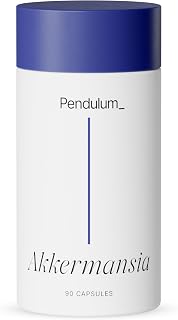
- Pendulum AkkermansiaLab-tested / studied
delayed-release capsules, 100M AFU — The only patented live A. muciniphila strain (WB-STR-0001); single-strain with chicory inulin, third-party tested. - Codeage Akkermansia Muciniphila
capsules, 100M AFU, 90 ct — Lower-cost Akkermansia plus chicory inulin synbiotic; 3-month supply, gluten-free. - Double Wood Akkermansia Probiotic + Postbiotic
capsules, per label — Budget Akkermansia option marketed around GLP-1 and postbiotic support.
As an Amazon Associate we earn from qualifying purchases. Akkermansia is a live, oxygen-sensitive strain — choose a delayed-release, third-party-tested product with a stated live AFU count.
A Note on the Evidence
The evidence reviewed here is predominantly observational, correlational, or derived from animal models; no randomized controlled trial has tested Akkermansia supplementation for safety or efficacy specifically in pregnant women or children. Akkermansia muciniphila supplements are not FDA-approved to treat, cure, or prevent any disease, and live probiotic formulations carry particular risk for immunocompromised individuals, those on immunosuppressive therapy, and persons with active inflammatory bowel disease—categories that can include children and pregnant women. This article is informational only and does not constitute medical advice; always consult a qualified healthcare provider before starting any supplement during pregnancy or for a child.
Frequently Asked Questions
Is Akkermansia muciniphila safe for children to take as a supplement?
No pediatric safety trials for Akkermansia supplements have been published. While observational research associates higher Akkermansia abundance with better metabolic health in children [1], translating that correlation into a safe supplementation recommendation requires controlled evidence that does not yet exist. Consult a pediatrician before giving any probiotic supplement to a child.

Can pregnant women take Akkermansia supplements?
There are currently no human clinical trials of Akkermansia supplementation during pregnancy. Pregnancy involves significant immune modulation, and introducing any live probiotic organism without pregnancy-specific safety data carries unknown risk. General probiotic and synbiotic research in pregnancy has produced mixed outcomes depending on the organism and dose [3]. Pregnant women should consult their obstetrician before starting Akkermansia or any new probiotic.
Does a child's diet affect Akkermansia levels?
Yes—diet appears to be a meaningful driver of pediatric microbiome composition. Research in children with obesity found that carbohydrate intake was associated with alterations in gut microbial ecology and insulin resistance markers [2], suggesting that dietary quality shapes the environment in which Akkermansia and other organisms thrive. High-fiber, whole-food diets are associated with more favorable microbial diversity.

Is Akkermansia relevant to immune conditions in children, like vasculitis?
Emerging research has found associations between altered gut flora composition and cytokine dysregulation in children with immune-mediated conditions such as Henoch-Schönlein purpura [4]. Mouse research also links gut microbiota to cardiovascular inflammation and vasculitis pathways [5]. These findings are correlational and mechanistic rather than interventional; they do not support using Akkermansia supplements to treat immune conditions in children.
Should children with IBD avoid Akkermansia supplements?
Children with active IBD should avoid live probiotic products, including live Akkermansia formulations, without explicit guidance from a gastroenterologist. Active IBD involves compromised mucosal barrier integrity, and introducing live bacteria into a disrupted gut environment carries potential risk that is not present in healthy populations. Even promising microbiome-modulation approaches in IBD require careful clinical oversight [6].
What does Akkermansia actually do in the gut that makes researchers interested in it for children?
Akkermansia muciniphila is proposed to strengthen intestinal barrier integrity by degrading mucin (which stimulates fresh mucin production), upregulating tight-junction proteins that seal the gut lining, and signaling through its outer-membrane protein Amuc_1100 to modulate immune tone. It has also been associated in adult studies with GLP-1 stimulation and improvements in insulin sensitivity. These mechanisms are relevant to childhood metabolic health given the links between gut barrier dysfunction, inflammation, and insulin resistance observed in pediatric cohorts [1].
References
- Liu L et al. Childhood obesity and insulin resistance is correlated with gut microbiome serum protein: an integrated metagenomic and proteomic analysis. Scientific reports (2025). PMID 40593262
- Prodam F et al. The ecology of the microbiota in children with obesity is associated with the intake of carbohydrates and insulin resistance. Clinical nutrition (Edinburgh, Scotland) (2025). PMID 40907063
- Edwards PT et al. Microbiota on biotics: probiotics, prebiotics, and synbiotics to optimize growth and metabolism. American journal of physiology. Gastrointestinal and liver physiology (2020). PMID 32755308
- Liang M et al. Study on the correlation between intestinal flora and cytokines in children with Henoch-Schönlein purpura. Cytokine (2025). PMID 40373421
- Jena PK et al. Intestinal Microbiota Contributes to the Development of Cardiovascular Inflammation and Vasculitis in Mice. Circulation research (2025). PMID 40026151
- Lupusoru R et al. AI-Guided Multi-Omic Microbiome Modulation Improves Clinical and Inflammatory Outcomes in Refractory IBD: A Real-World Study. International journal of molecular sciences (2025). PMID 41516078
These statements have not been evaluated by the Food and Drug Administration. This information is not intended to diagnose, treat, cure, or prevent any disease. Content is for informational purposes only and is not medical advice; consult a qualified healthcare provider before starting any supplement. As an Amazon Associate we earn from qualifying purchases.