Akkermansia muciniphila is a gram-negative bacterium that colonizes the mucus layer of the gut and has attracted substantial research interest for its proposed roles in intestinal barrier support, metabolic health, and GLP-1 secretion. Unlike conventional probiotic species such as Lactobacillus or Bifidobacterium, Akkermansia is an oxygen-sensitive anaerobe, which makes manufacturing, stabilizing, and delivering a viable supplement considerably more technically demanding. That complexity has direct consequences for what you should look for—and what you should avoid—when evaluating products.
The commercial Akkermansia supplement market is still young, and regulatory oversight of specific label claims is limited. That creates space for products that range from rigorously formulated to essentially useless. This guide walks through the meaningful variables: colony-forming unit counts, the live-versus-pasteurized question, strain identity, delivery technology, and the red flags that signal a product is unlikely to deliver what it promises. This is informational content, not medical advice; Akkermansia supplements are not FDA-approved to treat, cure, or prevent any disease.
Key Takeaways
- Prioritize products with a CFU guarantee at expiry, not at manufacture, and with third-party COAs confirming strain identity and count.
- Pasteurized Akkermansia formulations avoid oxygen-stability problems and may deliver more consistent bioactive exposure than poorly manufactured live products.
- Enteric coating or acid-resistant encapsulation is essential for live formulations to survive gastric transit; without it, viable delivery to the colon is unlikely.
- Avoid brands that use disease-treatment language, cannot provide current batch-specific COAs, or refuse to disclose strain designation and manufacturing conditions.
- Immunocompromised individuals, those on immunosuppressants, and people with active IBD should consult a physician before using any Akkermansia supplement, live or pasteurized.
Understanding CFU Counts: What the Numbers Actually Mean
CFU stands for colony-forming units, a measure of the number of viable, potentially active microbial cells per serving. For conventional probiotics, consumer products commonly range from one billion (1×10⁹) to several hundred billion CFU. Akkermansia products typically list doses in the range of 5×10⁹ to 1×10¹¹ CFU per capsule, though the number on the label matters less than the number that survives manufacturing, storage, and gastric transit to reach the colon.
Because Akkermansia is strictly anaerobic, exposure to oxygen at any stage—during production, encapsulation, packaging, or storage—can dramatically reduce viable counts. A label claiming 100 billion CFU at manufacture may deliver a fraction of that at the time of consumption if the cold chain was broken or the packaging is not oxygen-resistant. When evaluating a product, look for a CFU guarantee ‘at expiry’ or ‘at time of use’ rather than ‘at time of manufacture.’ The at-manufacture figure is commercially favorable but practically uninformative.
There is currently no established minimum effective CFU dose for Akkermansia in humans derived from large, well-controlled trials. Dosing in the human intervention studies that do exist has varied considerably. Treat any brand claim of a specific ‘clinically proven dose’ with caution unless it is tied to a specific published trial methodology you can independently verify.
Live vs. Pasteurized Akkermansia: A Genuinely Important Distinction
Most probiotic research assumes that live, metabolically active bacteria are necessary for effect. Akkermansia presents an interesting exception. Research has identified a specific outer-membrane protein, Amuc_1100, that appears to retain biological activity after pasteurization and has been proposed as a key mediator of some of Akkermansia’s gut-barrier and metabolic effects. This finding opened the door to pasteurized formulations that sidestep the oxygen-sensitivity problem and potentially reduce risk for individuals who should not consume live bacteria.

Pasteurized Akkermansia has a significant practical advantage: it is stable at ambient temperature and does not require the stringent anaerobic manufacturing conditions that make live Akkermansia production expensive and technically difficult. This translates into products that are easier to ship, store, and verify for potency. The trade-off is that pasteurization eliminates the possibility of colonization—pasteurized cells cannot reproduce in the gut—so any benefit must come from direct interaction between cell components and host tissue rather than from sustained microbial engraftment.
Live Akkermansia supplements exist, but the technical bar for maintaining viability is high. If a live product is not packaged in nitrogen-flushed, oxygen-barrier blister packs or similarly protective packaging, and if it does not require refrigeration or at minimum provide documented stability at room temperature, there is real reason to doubt whether meaningful live counts reach the colon. Pasteurized formulations from manufacturers with documented quality controls may in practice deliver more consistent bioactive exposure than poorly stabilized live products, even if the theoretical ceiling of live colonization is appealing.
Strain Identity and Third-Party Verification
Not all Akkermansia muciniphila strains are equivalent. The species contains genetic diversity, and the strains used in published human trials—most notably MucT (ATCC BAA-835) and the commercially developed WB-STR-0001 strain—are not necessarily the strains in every product on the market. A label that reads ‘Akkermansia muciniphila’ without identifying the specific strain tells you nothing about whether that organism matches what was studied in human trials.
Third-party testing by a recognized independent laboratory (NSF International, USP, Informed Sport, or a contracted analytical lab that publishes methodology) provides a layer of verification that the product contains what the label claims at the quantity stated. This is especially important for Akkermansia because the specialized manufacturing requirements create more opportunity for quality failures than with conventional probiotics. Certificates of Analysis (COAs) should be current, batch-specific, and available on request or posted publicly. Refuse to purchase from brands that cannot or will not provide COAs.
Genomic sequencing or PCR-based strain verification in COAs is the gold standard for confirming strain identity. Cell count verification using quantitative PCR or plate counting under anaerobic conditions should be present for live formulations. For pasteurized products, protein or cell-equivalent quantification methods are appropriate. If a COA only tests for heavy metals and contaminants but says nothing about microbial identity or count, it does not confirm you are getting what is advertised.
Delivery Technology and Gut Survival
Reaching the colon alive—or structurally intact in the case of pasteurized forms—requires surviving stomach acid (pH 1.5–3.5) and bile salts in the small intestine. Standard vegetarian cellulose capsules offer no meaningful protection against gastric acid. Enteric-coated capsules or tablets, acid-resistant polymer coatings, and multi-layer encapsulation technologies are designed to delay dissolution until the capsule passes into the more neutral environment of the small intestine and colon.

For live Akkermansia, enteric coating or equivalent gastric protection is essentially non-negotiable; without it, the majority of cells are likely inactivated before reaching the intended site of action. For pasteurized forms, gastric resistance is less critical because structural integrity of cell-wall proteins is more robust than viability, but some protection may still improve consistency of delivery. Look for explicit mention of delivery technology in product materials, not just ‘advanced formula’ marketing language.
Prebiotics added to a formulation—particularly mucin-related compounds, inulin, or fructooligosaccharides—are sometimes included to support Akkermansia growth or create a favorable colonic environment. This can be beneficial in principle, but only if the prebiotic is present at a meaningful dose and the live cells can actually colonize. In pasteurized products, a prebiotic additive offers no colonization benefit and may simply be a marketing addition. Evaluate additives on their own merits rather than treating their presence as a quality signal.
Red Flags: What to Avoid When Choosing a Product
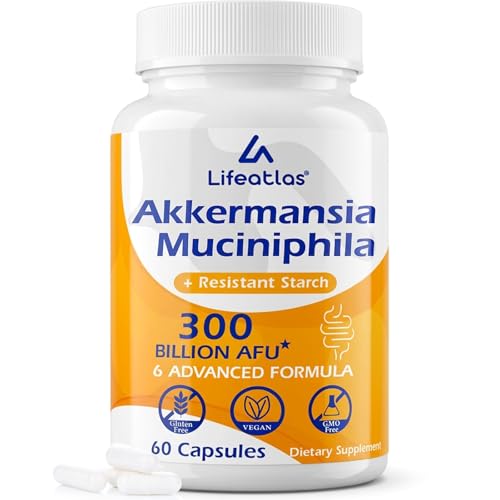
Several patterns reliably indicate that a product is unlikely to be what it claims. The first is vague sourcing: no strain designation, no manufacturing location, and no information about how the organism is produced. Akkermansia cannot be grown under standard aerobic probiotic manufacturing conditions; any brand that cannot describe its anaerobic production process should prompt skepticism. Similarly, extremely low prices are a warning sign—legitimate Akkermansia manufacturing is expensive, and products priced comparably to off-the-shelf Lactobacillus supplements almost certainly cut corners on production quality or bacterial identity.
Disease-treatment language is both a legal red flag and a credibility signal. Akkermansia supplements are sold as dietary supplements in the United States and most jurisdictions, meaning they cannot legally claim to treat, cure, or prevent any disease. Brands that make explicit claims about reversing metabolic syndrome, treating leaky gut syndrome, or producing weight loss results equivalent to GLP-1 receptor agonist drugs are making unsubstantiated and likely illegal structure-function claims. This kind of language indicates a brand willing to mislead consumers, which should reduce confidence in their quality controls generally.
Absence of an expiration date, lack of storage instructions, no refund policy, and customer service that cannot answer basic questions about strain identity or testing methodology are additional red flags. Legitimate supplement manufacturers understand that sophisticated consumers will ask these questions and have answers ready. A brand that deflects or provides only marketing language when asked about COAs, strain designation, or oxygen-barrier packaging is not a brand worth trusting with your gut health.
Who Should Be Especially Careful Before Using Akkermansia Supplements
Live probiotic formulations carry potential risk for certain populations regardless of the specific bacterial species involved. Individuals who are immunocompromised—whether due to HIV/AIDS, chemotherapy, organ transplantation, or primary immunodeficiency disorders—face elevated risk of probiotic-associated bacteremia or sepsis. Those taking immunosuppressive medications, including high-dose corticosteroids, calcineurin inhibitors, and biologic agents, fall into the same category. For these groups, even pasteurized Akkermansia should be discussed with a physician before use, and live Akkermansia should generally be avoided unless under medical supervision.

Individuals with active inflammatory bowel disease (IBD)—Crohn’s disease or ulcerative colitis—occupy a nuanced position. While disrupted Akkermansia abundance has been observed in IBD contexts, the gut barrier in active disease is compromised, and the safety profile of introducing live bacteria requires clinical evaluation on a case-by-case basis. Pregnant and breastfeeding individuals should also consult a healthcare provider, as there is insufficient safety data for these populations. Healthy adults without these conditions who are interested in gut microbiome support are the primary audience for over-the-counter Akkermansia supplements.
🛒 Where to Buy Akkermansia muciniphila
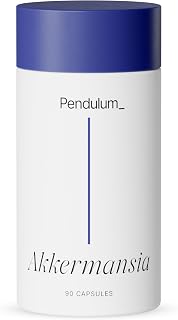
- Pendulum AkkermansiaLab-tested / studied
delayed-release capsules, 100M AFU — The only patented live A. muciniphila strain (WB-STR-0001); single-strain with chicory inulin, third-party tested. - Codeage Akkermansia Muciniphila
capsules, 100M AFU, 90 ct — Lower-cost Akkermansia plus chicory inulin synbiotic; 3-month supply, gluten-free. - Double Wood Akkermansia Probiotic + Postbiotic
capsules, per label — Budget Akkermansia option marketed around GLP-1 and postbiotic support.
As an Amazon Associate we earn from qualifying purchases. Akkermansia is a live, oxygen-sensitive strain — choose a delayed-release, third-party-tested product with a stated live AFU count.
A Note on the Evidence
Akkermansia muciniphila supplements are not FDA-approved to diagnose, treat, cure, or prevent any disease, and most human evidence comes from small, short-duration trials; results should not be extrapolated beyond what the specific study populations showed. Individuals who are immunocompromised, taking immunosuppressive therapy, pregnant, breastfeeding, or managing active inflammatory bowel disease should consult a qualified healthcare provider before using any Akkermansia product, live or pasteurized.

Frequently Asked Questions
What CFU dose should I look for in an Akkermansia supplement?
There is no established minimum effective human dose confirmed by large controlled trials. Products in the range of 10 to 100 billion CFU are common, but the number that matters is the count guaranteed at expiry under recommended storage conditions, not the manufacturing figure. A lower CFU count with verified stability and delivery technology is more meaningful than a high count with no quality controls.
Is pasteurized Akkermansia actually effective, or do I need live bacteria?
Pasteurized Akkermansia has shown biological activity in research settings, with evidence suggesting that the outer-membrane protein Amuc_1100 retains functional properties after heat treatment. Whether pasteurized or live forms are superior for specific outcomes in humans has not been definitively resolved. Pasteurized forms have practical advantages in stability and safety for sensitive populations, while live forms theoretically allow for colonization, provided they survive manufacturing and transit.
How do I verify that an Akkermansia product actually contains what it claims?
Request a current, batch-specific Certificate of Analysis from an independent third-party laboratory. The COA should confirm strain identity (ideally via PCR or genomic sequencing), viable or cell-equivalent count, and absence of contaminants. Brands that cannot produce this documentation or provide only outdated or generic COAs should be avoided.
Does the packaging of an Akkermansia supplement matter?
Yes, significantly for live formulations. Akkermansia is strictly anaerobic and is killed by oxygen exposure. Live products should be packaged in nitrogen-flushed, oxygen-barrier packaging—typically individual foil blister packs or sealed amber glass—and should specify refrigeration or demonstrate documented ambient-temperature stability. Standard plastic pill bottles without oxygen-barrier liners are inadequate for maintaining live Akkermansia viability.

Can Akkermansia supplements interact with medications?
There is limited direct evidence on drug-supplement interactions for Akkermansia specifically. The general caution for live probiotics applies: they are contraindicated or require physician oversight in individuals taking immunosuppressive medications because of the risk of bacterial translocation. If you take any prescription medication, discuss new supplements with your prescriber before starting, particularly if the medication affects immune function or gut motility.
Are there dietary changes that support Akkermansia levels without supplementation?
Akkermansia abundance in the gut has been associated with dietary patterns high in polyphenols, fiber, and fermented foods in observational research. Foods such as pomegranate, cranberry, green tea, and high-fiber vegetables are among those examined in this context. Dietary approaches carry no risk profile equivalent to live probiotic supplementation and represent a reasonable complementary strategy, though they are not substitutes for medical care in any diagnosed condition.
These statements have not been evaluated by the Food and Drug Administration. This information is not intended to diagnose, treat, cure, or prevent any disease. Content is for informational purposes only and is not medical advice; consult a qualified healthcare provider before starting any supplement. As an Amazon Associate we earn from qualifying purchases.