Akkermansia muciniphila is a gut bacterium that has attracted serious scientific attention over the past decade, not as a weight-loss cure, but as a potential regulator of metabolic health. Found naturally in the mucus layer of the intestine, it comprises more than 1% of a healthy adult microbiome and has been observed at lower abundance in people with obesity, type 2 diabetes, and related cardiometabolic conditions. The question researchers have been working to answer is straightforward: can deliberately increasing Akkermansia levels improve the metabolic picture, and does body weight respond?
The honest answer, as of 2026, is nuanced. Clinical trials have moved beyond rodent studies and early mechanistic work into controlled human experiments, and the findings are genuinely interesting — but modest, context-dependent, and still accumulating. This article walks through what those trials actually measured, what they found, and where the evidence remains thin.
Key Takeaways
- Clinical trials have tested pasteurized Akkermansia muciniphila in humans and found improvements in cardiometabolic markers including insulin sensitivity and cholesterol, particularly in a 2019 proof-of-concept study [1].
- A 2026 randomized controlled trial examined Akkermansia for weight loss maintenance rather than induction, reflecting a more realistic application of microbiome-targeted intervention [2].
- Baseline gut levels of Akkermansia may predict who responds to supplementation — people with lower natural abundance may see different outcomes than those already carrying adequate levels [3].
- Most trials have been short in duration with small sample sizes; body weight has rarely been the primary endpoint, and effects on weight itself have been modest.
- Akkermansia supplements are not FDA-approved treatments for obesity or metabolic disease; the evidence is early, promising, and still accumulating.
What Akkermansia Does in the Gut: The Proposed Mechanisms
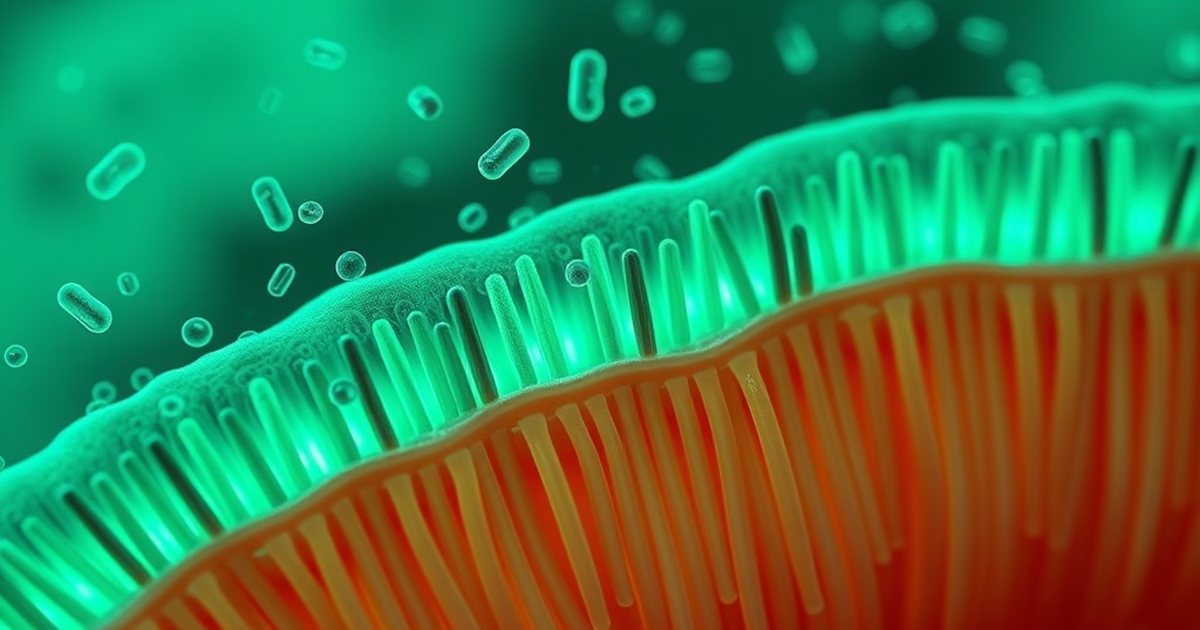
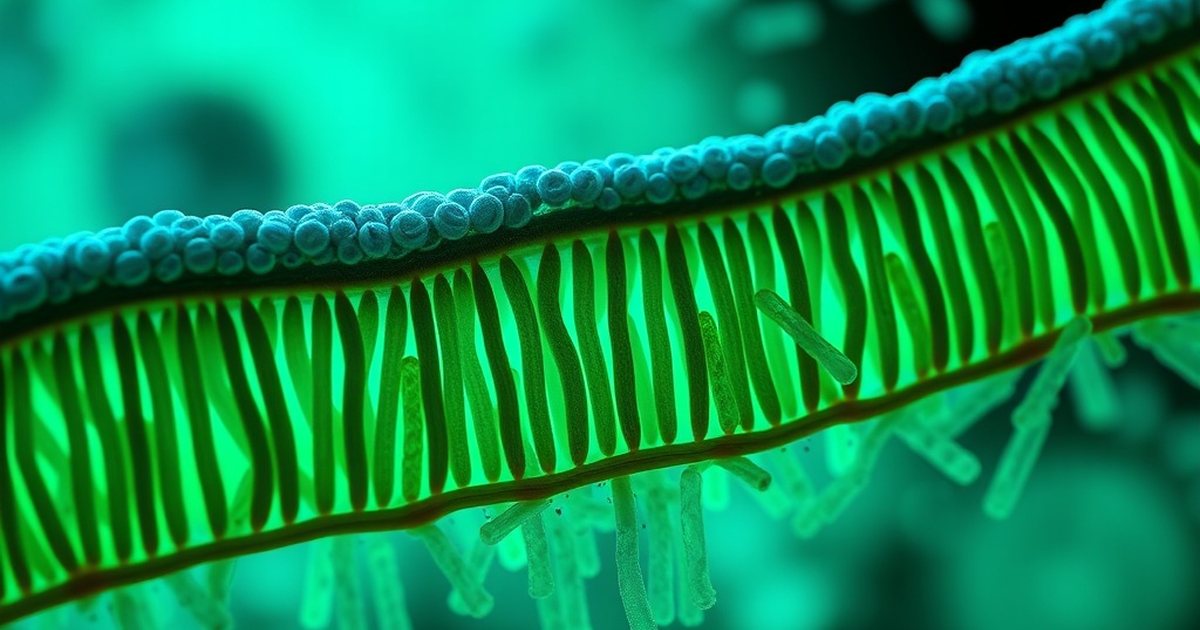
Understanding why Akkermansia might influence weight requires understanding its role in gut physiology. The bacterium feeds on mucin, the glycoprotein layer lining the intestine, and in doing so appears to stimulate the gut to replenish that layer — paradoxically strengthening rather than degrading the mucus barrier over time. A thicker, healthier mucus layer is associated with reduced intestinal permeability, meaning fewer bacterial fragments and inflammatory signals reaching systemic circulation.
Beyond barrier function, Akkermansia produces short-chain fatty acids and interacts with enteroendocrine cells in ways that may influence hormone signaling. Its outer-membrane protein Amuc_1100 has been identified as a candidate mediator of some of these effects, including potential stimulation of GLP-1 secretion — the same pathway targeted by widely prescribed diabetes and obesity medications. Reviews of the metabolic evidence have summarized these mechanisms as biologically plausible and increasingly supported by preclinical data [4], though human trials are still needed to confirm causal relationships.
It is also worth noting that Akkermansia abundance can be influenced by diet and supplementation. One randomized clinical trial found that oleoylethanolamide (OEA) supplementation was associated with increased Akkermansia levels in people with obesity, suggesting that dietary or supplement strategies targeting this bacterium indirectly may be feasible [5].
The 2019 Proof-of-Concept Trial: First Human Evidence
The landmark entry point for human clinical evidence came from a 2019 proof-of-concept study published in Nature Medicine, which enrolled overweight and obese adults and randomized them to receive either placebo, live Akkermansia muciniphila, or pasteurized Akkermansia muciniphila daily for three months [1]. This was not a large trial — it was explicitly designed as an exploratory study to assess safety and early signals — but its findings shaped subsequent research priorities.
The pasteurized form of the bacterium was associated with improvements in insulin sensitivity, reductions in total cholesterol, and some cardiometabolic markers compared to placebo. Importantly, the supplementation was found to be safe and well-tolerated. Body weight was measured but significant weight loss was not the headline outcome; the study was powered for metabolic endpoints, not adiposity. The finding that a heat-killed, pasteurized preparation could produce measurable effects was significant because it suggested the mechanism did not require viable bacteria — pointing toward the outer-membrane protein and structural components rather than live colonization.
The 2026 Randomized Controlled Trial: Weight Loss Maintenance
A more recent and methodologically rigorous study published in Nature Medicine in 2026 examined a different question: not whether Akkermansia causes initial weight loss, but whether it helps people maintain weight loss after they have already lost it [2]. This is a meaningful distinction. Sustaining weight loss is widely recognized as harder than achieving it, and the gut microbiome is thought to play a role in weight regain.
The trial used pasteurized Akkermansia muciniphila in people with overweight and obesity who had undergone an initial weight-reduction phase, then randomized participants to continued supplementation or control. This controlled randomized design represents a step up in evidence quality from the 2019 pilot, and its focus on maintenance rather than induction reflects a more realistic framing of what microbiome-targeted intervention might realistically contribute. The study adds to a developing picture in which Akkermansia’s role may be more about preserving a favorable metabolic state than driving acute fat loss.
Baseline Levels Matter: The 2025 Type 2 Diabetes Findings
A 2025 study published in Cell Metabolism introduced an important nuance to the evidence base: the effectiveness of Akkermansia supplementation in patients with overweight or obese type 2 diabetes appears to depend significantly on the patient’s baseline gut levels of the bacterium [3]. Individuals who started the study with lower natural abundance of Akkermansia appeared to respond differently than those who already had relatively higher levels.
This finding has real clinical implications. It suggests that Akkermansia supplementation is not a uniform intervention that works identically across all people with metabolic disease. Baseline microbiome composition — something that varies by diet, medication use, age, and prior antibiotic exposure — may predict who is most likely to benefit. It also raises the possibility that future approaches may need to characterize an individual’s microbiome before recommending supplementation. At present, routine clinical microbiome testing for this purpose is not standard practice.
How Akkermansia Fits Into the Broader Probiotic and Postbiotic Landscape
Akkermansia occupies an unusual position in the probiotic space. Technically it is being investigated both as a live probiotic and as a postbiotic — a preparation of inactivated microorganisms with health benefits. The 2019 human trial found that pasteurized Akkermansia performed at least as well as the live form [1], which is consistent with evidence that the Amuc_1100 protein survives pasteurization and retains biological activity.
A broader review of probiotics, prebiotics, synbiotics, and postbiotics in the context of obesity acknowledges that the field remains marked by heterogeneity in study design, populations, and outcomes, and that translating animal data to human benefit has proven difficult across many bacterial strains [6]. Akkermansia is among the more promising candidates based on mechanistic plausibility and early trial signals, but it exists within a field where enthusiasm has historically run ahead of evidence. Realistic expectations remain appropriate.
What the Trials Do and Don't Tell Us About Weight
Reading the clinical trial literature carefully, a few things stand out. First, the primary outcomes in most Akkermansia trials have been metabolic — insulin sensitivity, fasting glucose, lipid markers, inflammatory markers — rather than body weight or body fat per se. Weight loss, where observed, has generally been modest and not the primary endpoint. This is not a criticism of the research; it reflects the current scientific hypothesis that Akkermansia’s main value may be in improving the metabolic environment rather than directly driving fat loss.
Second, trial durations have typically been short — weeks to a few months — which limits conclusions about long-term weight effects. Third, participant populations have varied: overweight but otherwise healthy adults, obese adults with type 2 diabetes, and post-weight-loss maintenance populations have each been studied in different protocols [1][3][2], making direct comparison difficult. What emerges is early but genuinely suggestive evidence that Akkermansia supplementation, particularly in pasteurized form, may support cardiometabolic health in overweight individuals — but anyone expecting rapid, clinically meaningful weight loss from Akkermansia supplementation alone should temper that expectation against what trials have actually measured.
🛒 Where to Buy Akkermansia muciniphila
- Pendulum AkkermansiaLab-tested / studied
delayed-release capsules, 100M AFU — The only patented live A. muciniphila strain (WB-STR-0001); single-strain with chicory inulin, third-party tested. - Codeage Akkermansia Muciniphila
capsules, 100M AFU, 90 ct — Lower-cost Akkermansia plus chicory inulin synbiotic; 3-month supply, gluten-free. - Double Wood Akkermansia Probiotic + Postbiotic
capsules, per label — Budget Akkermansia option marketed around GLP-1 and postbiotic support.
As an Amazon Associate we earn from qualifying purchases. Akkermansia is a live, oxygen-sensitive strain — choose a delayed-release, third-party-tested product with a stated live AFU count.
A Note on the Evidence
The clinical evidence for Akkermansia muciniphila and weight-related outcomes is early-stage, based primarily on small short-duration trials with metabolic rather than adiposity endpoints; results should not be extrapolated to guarantee weight loss. Akkermansia supplements are not FDA-approved to treat, cure, or prevent any disease, and individuals who are immunocompromised, on immunosuppressive medications, pregnant, or living with active inflammatory bowel disease should consult a qualified healthcare provider before use.
Frequently Asked Questions
Does Akkermansia muciniphila directly cause weight loss?
Current clinical trial evidence does not support the claim that Akkermansia directly causes significant weight loss. The 2019 Nature Medicine proof-of-concept trial [1] found improvements in metabolic markers, but body weight was not the primary outcome. The 2026 Nature Medicine trial [2] focused on weight loss maintenance, not induction of weight loss.

What form of Akkermansia has the most clinical evidence?
Pasteurized (heat-killed) Akkermansia muciniphila has the most human trial evidence and was found to be at least as effective as the live form in the 2019 proof-of-concept study [1]. The heat-stable outer-membrane protein Amuc_1100 is thought to be an active component that survives pasteurization.
Who is most likely to benefit from Akkermansia supplementation for metabolic health?
A 2025 Cell Metabolism study in overweight and obese people with type 2 diabetes found that efficacy depended on baseline gut levels of the bacterium [3], suggesting those with naturally lower Akkermansia abundance may respond differently. Research in overweight adults without diabetes has also shown metabolic signals [1], but individual response appears to vary.
Can diet or other supplements increase Akkermansia levels?
Some evidence suggests dietary strategies can influence Akkermansia abundance. A randomized clinical trial found that oleoylethanolamide supplementation was associated with increased Akkermansia levels in people with obesity [5], indicating indirect microbiome-targeting approaches may be possible alongside direct supplementation.
Is Akkermansia safe for everyone?
The 2019 human trial found pasteurized and live Akkermansia to be safe and well-tolerated in otherwise healthy overweight adults [1]. However, live probiotic preparations carry potential risk for immunocompromised individuals, those on immunosuppressive therapy, or people with active inflammatory bowel disease. These groups should consult a physician before use.
How does Akkermansia relate to GLP-1 and blood sugar?
Preclinical and mechanistic evidence suggests Akkermansia may stimulate GLP-1 secretion and improve insulin sensitivity through its outer-membrane protein Amuc_1100 and short-chain fatty acid production. Reviews of the metabolic evidence have summarized these pathways as biologically plausible [4], and the 2019 human trial reported improvements in insulin sensitivity markers [1], though direct GLP-1 measurement in humans requires further study.
References
- Depommier C et al. Supplementation with Akkermansia muciniphila in overweight and obese human volunteers: a proof-of-concept exploratory study. Nature medicine (2019). PMID 31263284
- Mount S et al. Pasteurized Akkermansia muciniphila Muc(T) for weight loss maintenance in people with overweight and obesity: a controlled randomized trial. Nature medicine (2026). PMID 42120725
- Zhang Y et al. Akkermansia muciniphila supplementation in patients with overweight/obese type 2 diabetes: Efficacy depends on its baseline levels in the gut. Cell metabolism (2025). PMID 39879980
- Kobyliak N et al. Akkermansia muciniphila as a novel powerful bacterial player in the treatment of metabolic disorders. Minerva endocrinology (2022). PMID 35103461
- Payahoo L et al. Investigation the effect of oleoylethanolamide supplementation on the abundance of Akkermansia muciniphila bacterium and the dietary intakes in people with obesity: A randomized clinical trial. Appetite (2019). PMID 31132422
- Vallianou N et al. Probiotics, Prebiotics, Synbiotics, Postbiotics, and Obesity: Current Evidence, Controversies, and Perspectives. Current obesity reports (2020). PMID 32472285
These statements have not been evaluated by the Food and Drug Administration. This information is not intended to diagnose, treat, cure, or prevent any disease. Content is for informational purposes only and is not medical advice; consult a qualified healthcare provider before starting any supplement. As an Amazon Associate we earn from qualifying purchases.